
自2018年的欧洲之旅以来,我和PJG的足迹已遍布世界各地。我俩很长时间一直在计划一次深入的亚洲之旅,特别是东南亚各国。我一直特别向往那里丰富的美食、多样的文化以及各具特色的风土人情。越南一直是首选的目的地之一,自从来到美国后,我对越南有了更多的了解。
After our trip to Europe in 2018, PJG and I have traveled to many parts of the world. We had been planning an in-depth trip to Asia, especially Southeast Asian countries, for a long time. I have always been particularly looking forward to the rich cuisine, diverse cultures, and unique customs and people there.
Vietnam has always been one of the top destinations. Since coming to the United States, I have learned more about Vietnam.
来到美国之后,我接触到了很多越南人,加上自己经历了长达十年的思想重构,终于醒来的我特别期待去越南旅游。除了一些显而易见的原因,例如PJG的大儿子的妻子家族来自越南,以及我喜爱的美食家Anthony Bourdain所呈现的越南魅力,还有在学校结识的越南朋友,我对越南的好奇也源自一个重要的因素:越南也是一个共产党统治的国家,是的,我说的是统治,而不是执政。我来自于中国,所以我很好奇两个国家的相同和不同之处,两国人民的生活的相同和不同之处。
After arriving in the United States, I met many Vietnamese people through work and school. Coupled with my own decade-long ideological reconstruction, I was especially excited to travel to Vietnam after finally “waking up”. In addition to some obvious reasons, such as PJG’s eldest son’s wife’s family being from Vietnam; the charm of Vietnam presented by my beloved food critic Anthony Bourdain and Vietnamese friends I met at school my curiosity about Vietnam also stems from an important factor: Vietnam is also a country ruled by a Communist Party. Yes, I said ruled, not governed. I come from China, so I am very curious about the similarities and differences between the two countries and the lives of the people in both countries.
胡志明市,这座城市曾被称为西贡,曾是南越的首都。因为越南战争的失败,它被重新命名为胡志明市。我还是很喜欢西贡这个名字,感觉有一种别样的韵味。这是我第一次踏足中国之外的另一个共产党国家。入境时,我心中难免有些忐忑,但海关过程比进入中国简单得多,意外地没有进行指纹采集和拍照,这在罗刹国实在是难以想象的。
Ho Chi Minh City, formerly known as Saigon, was the capital of South Vietnam. Due to the failure of the Vietnam War, it was renamed Ho Chi Minh City. I still quite like the name Saigon, feeling it has a unique charm. This is the first time I set foot in another communist country outside of China. When entering the country, I inevitably felt a little uneasy, but the customs process was much simpler than when entering China. Surprisingly, there was no fingerprint collection or photographs, which is really hard to imagine in China.
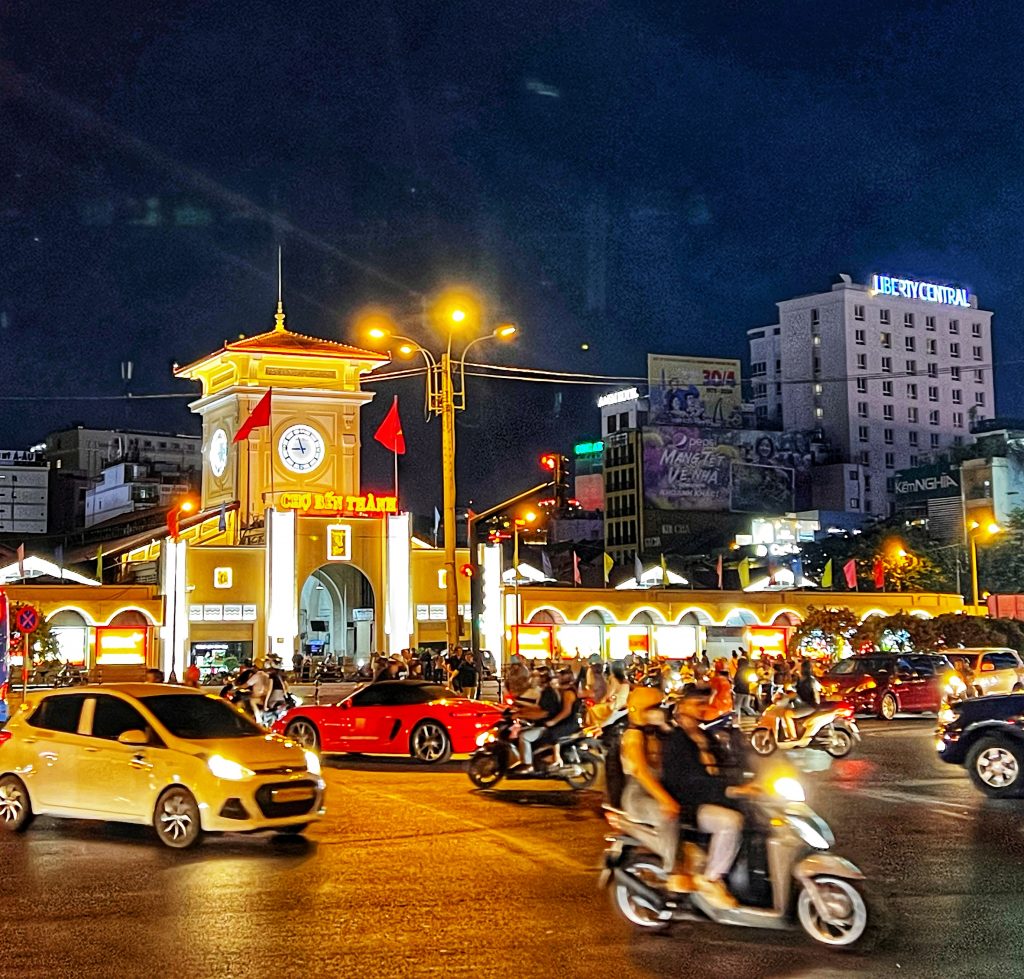
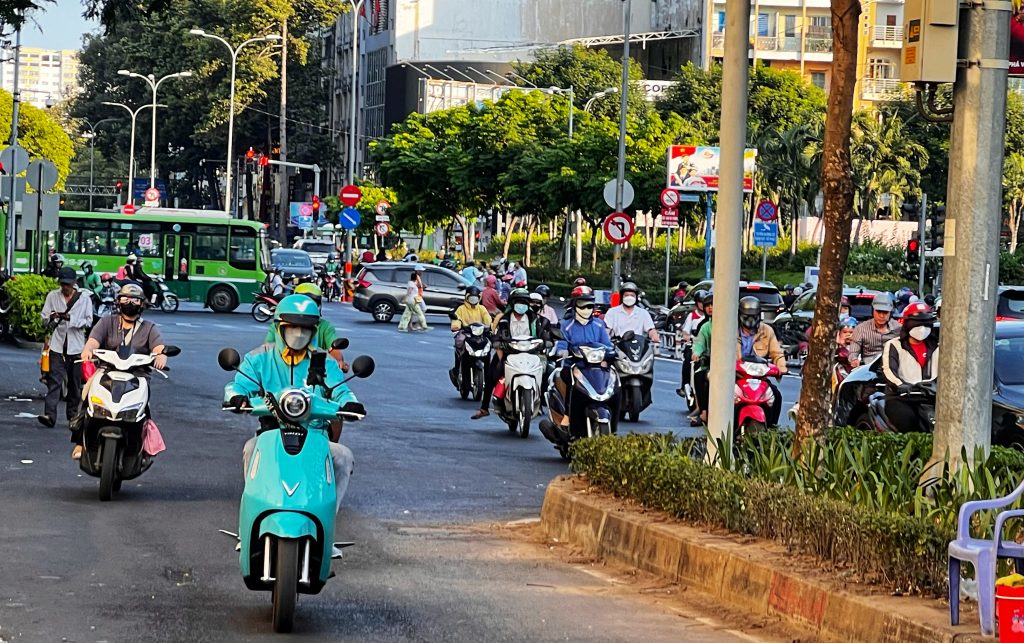
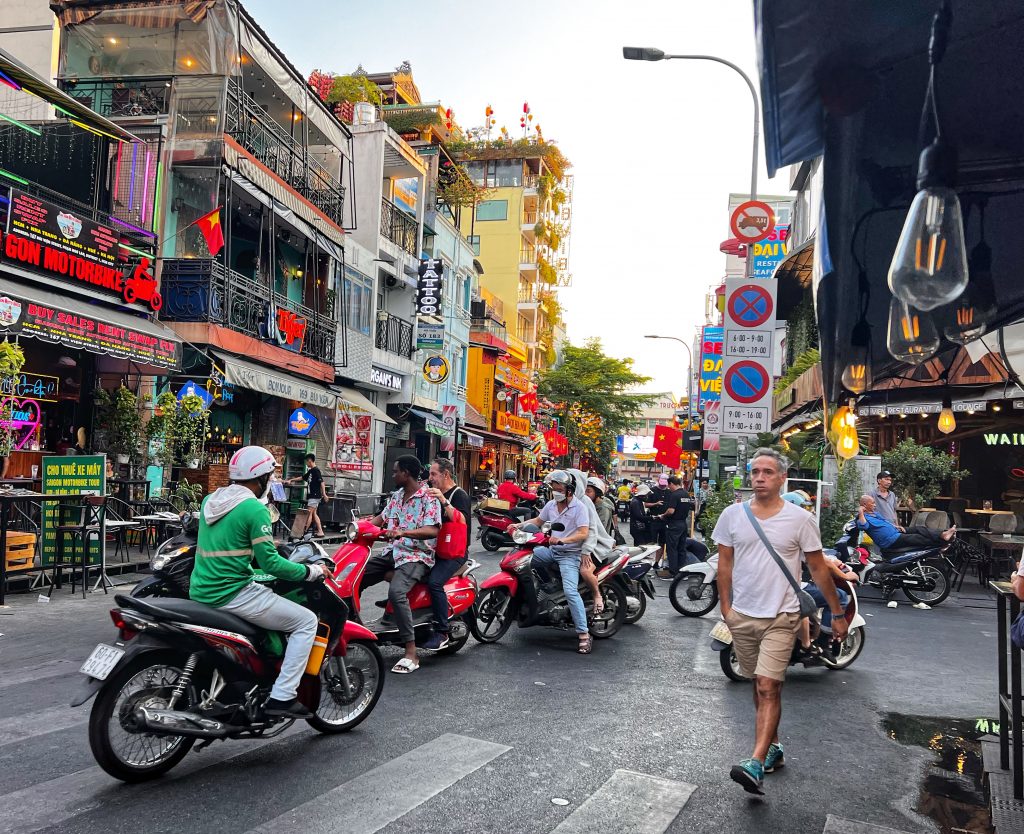
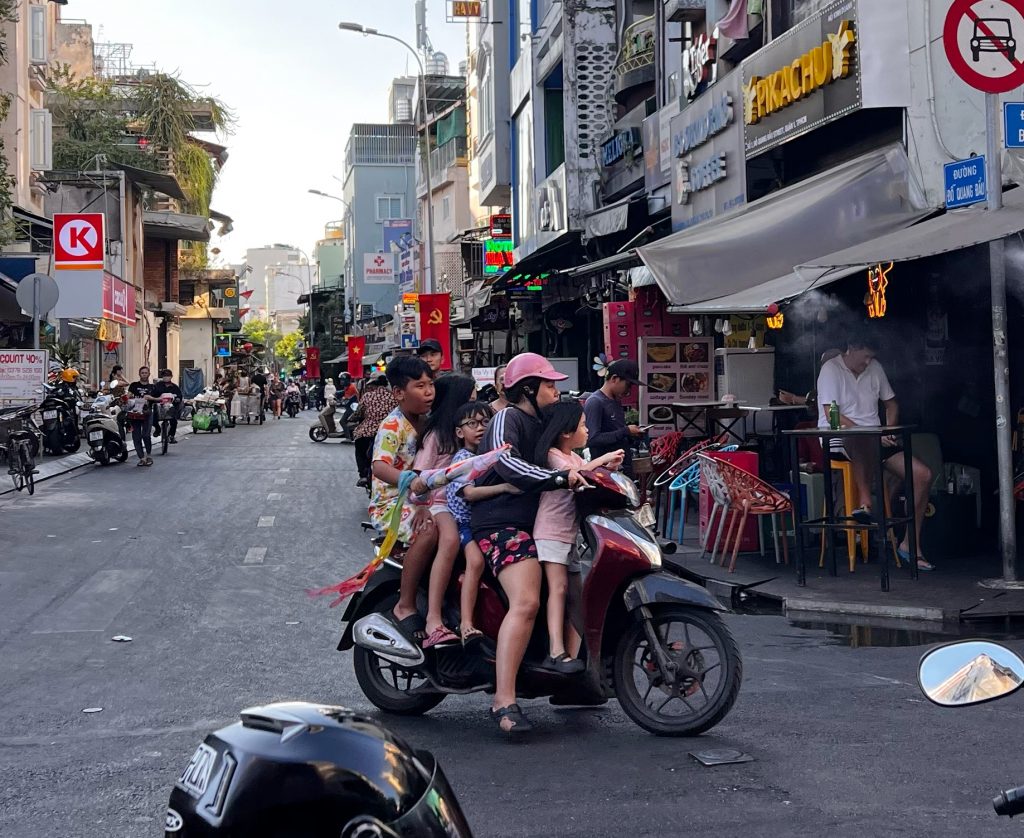
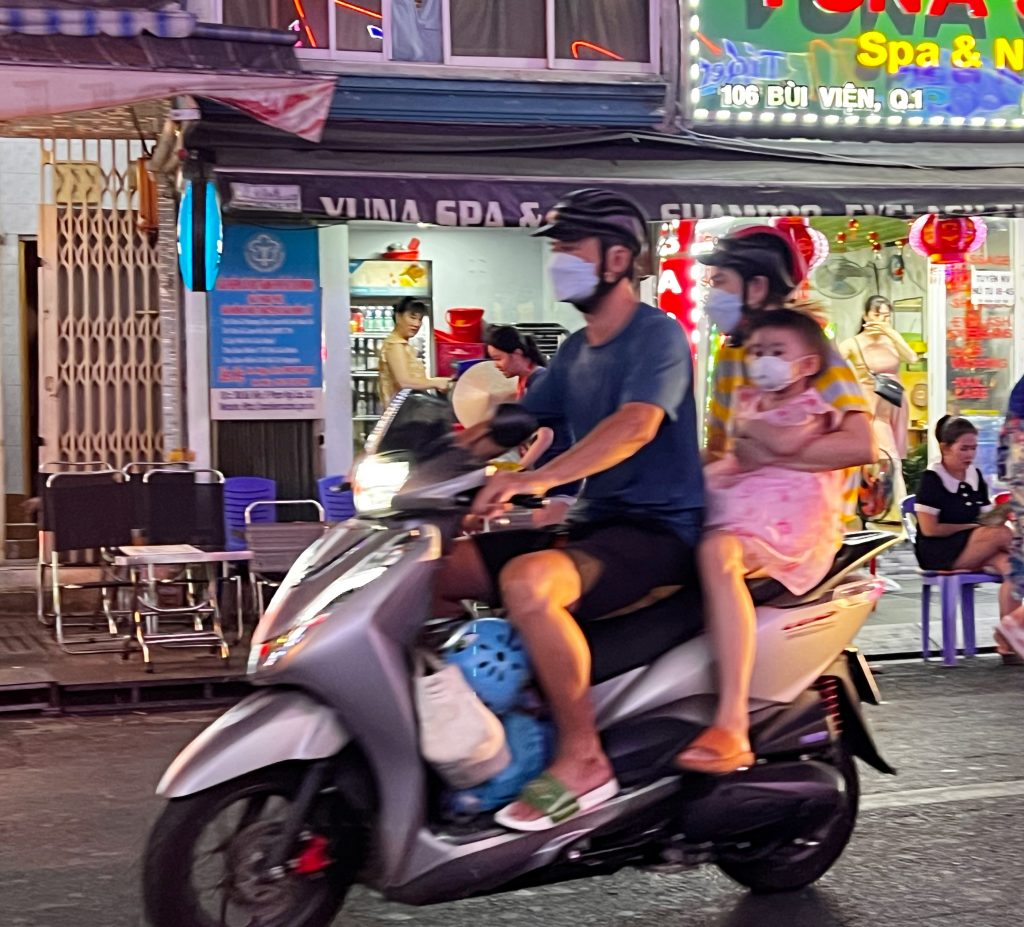
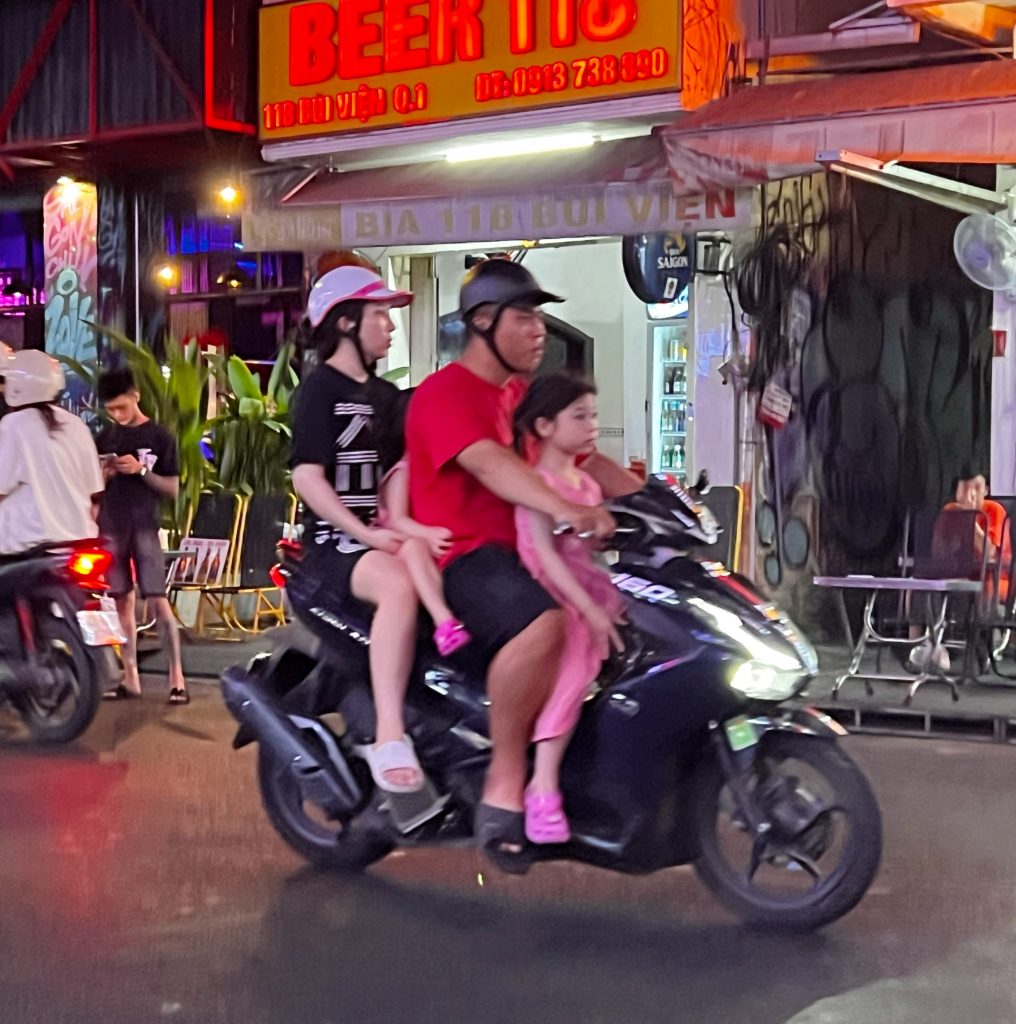
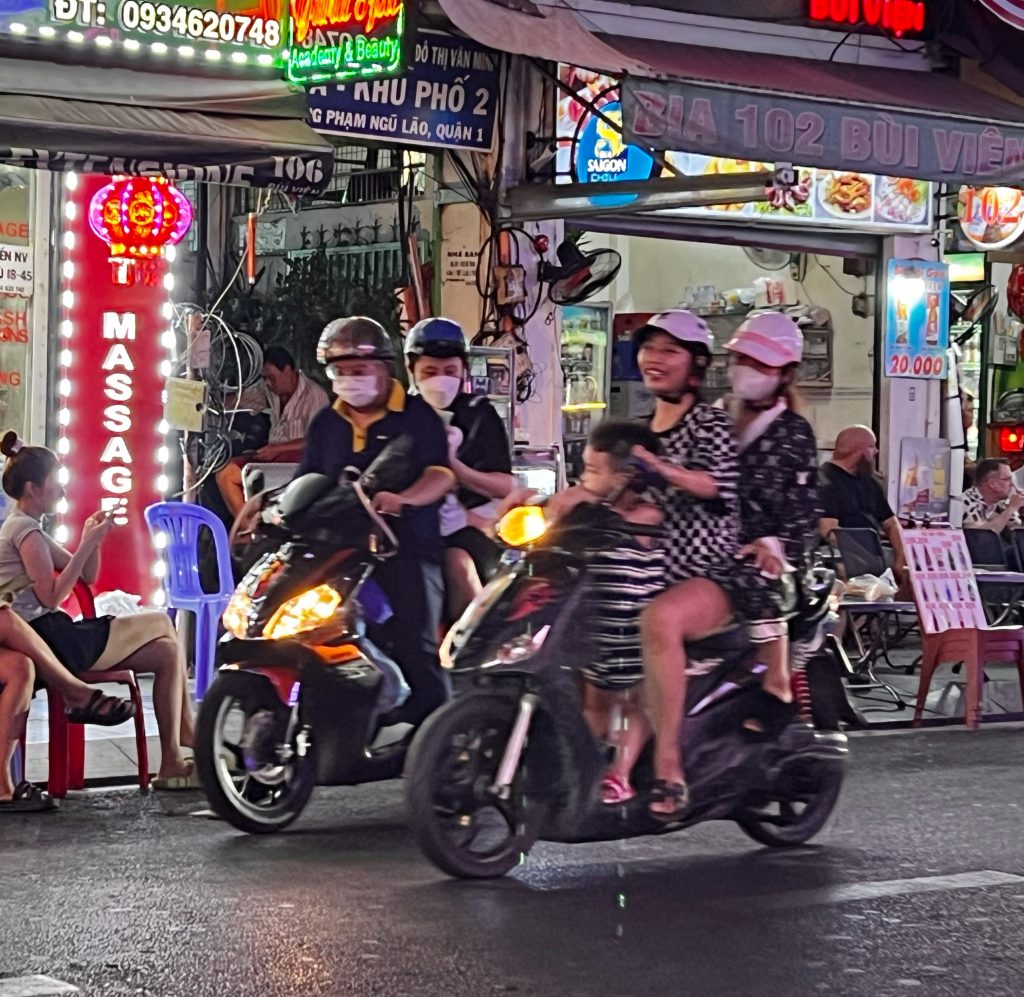
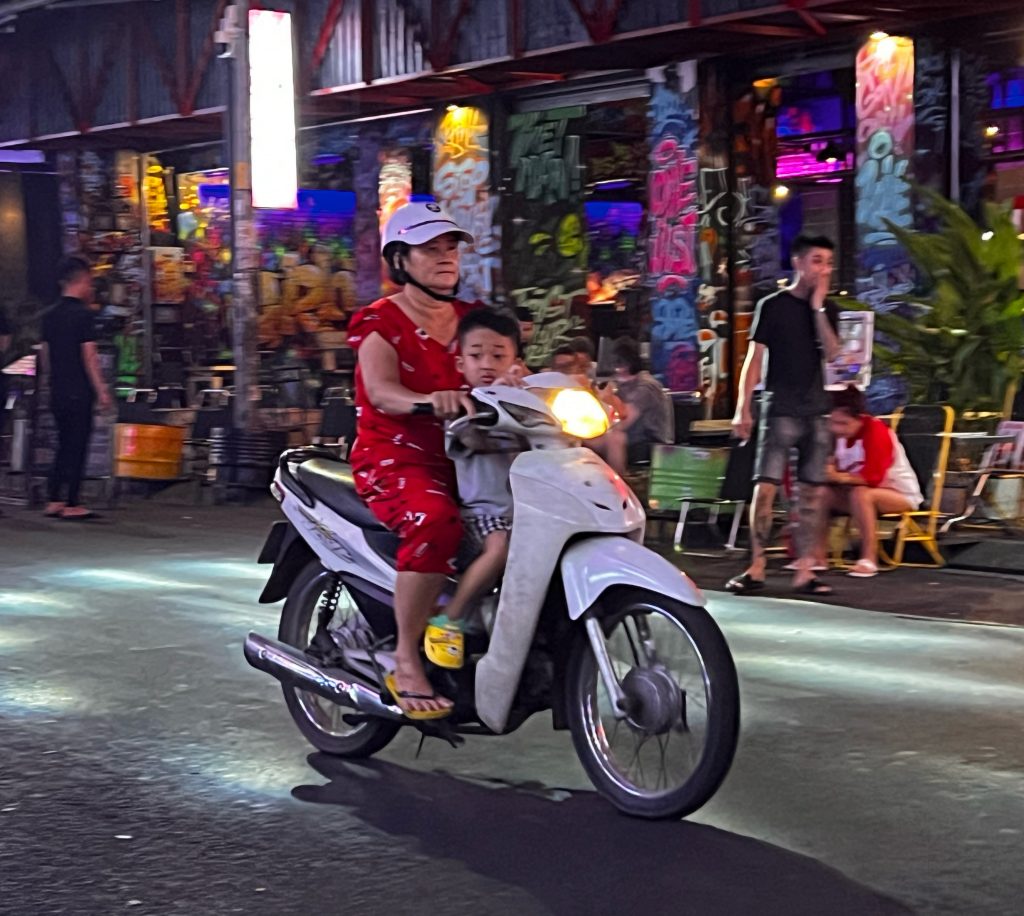
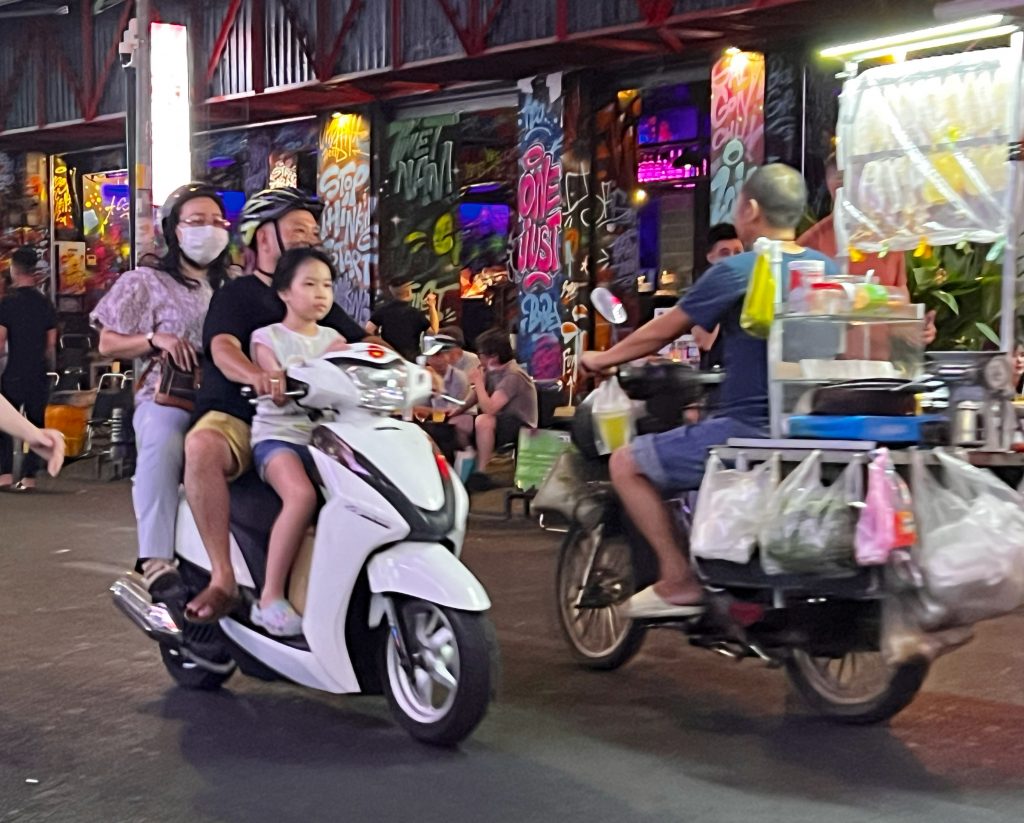
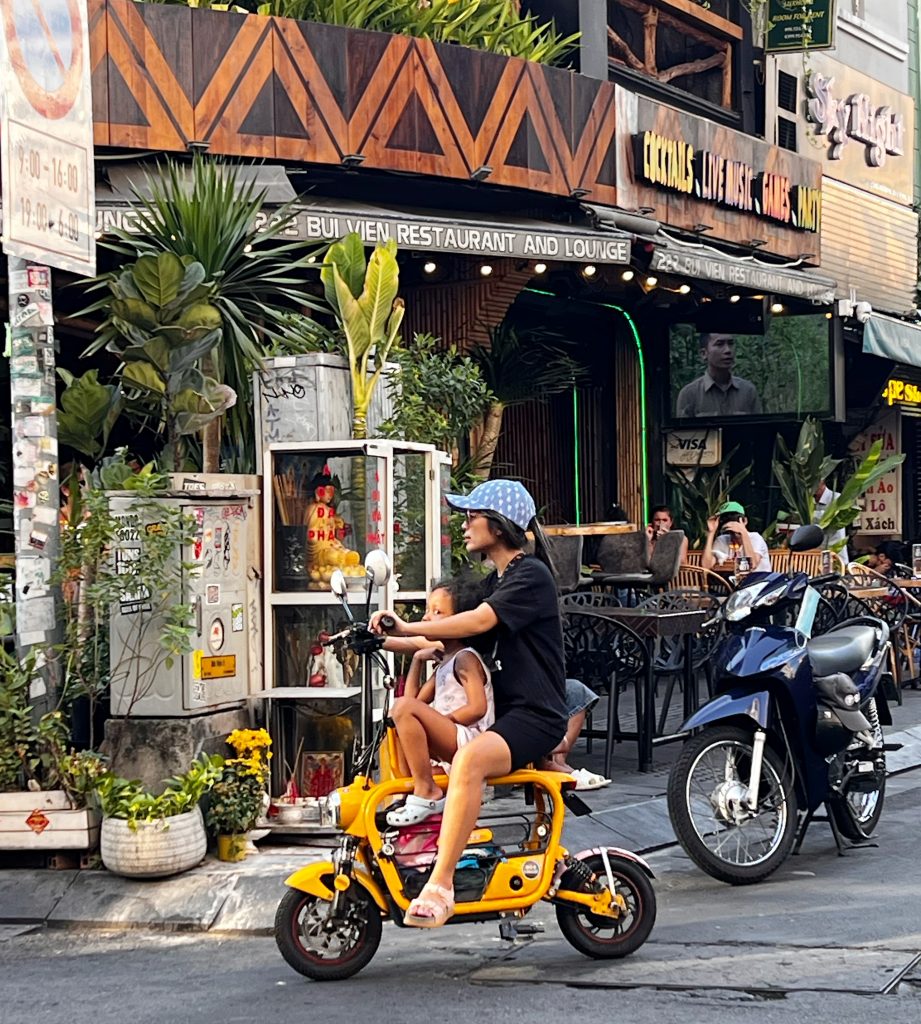
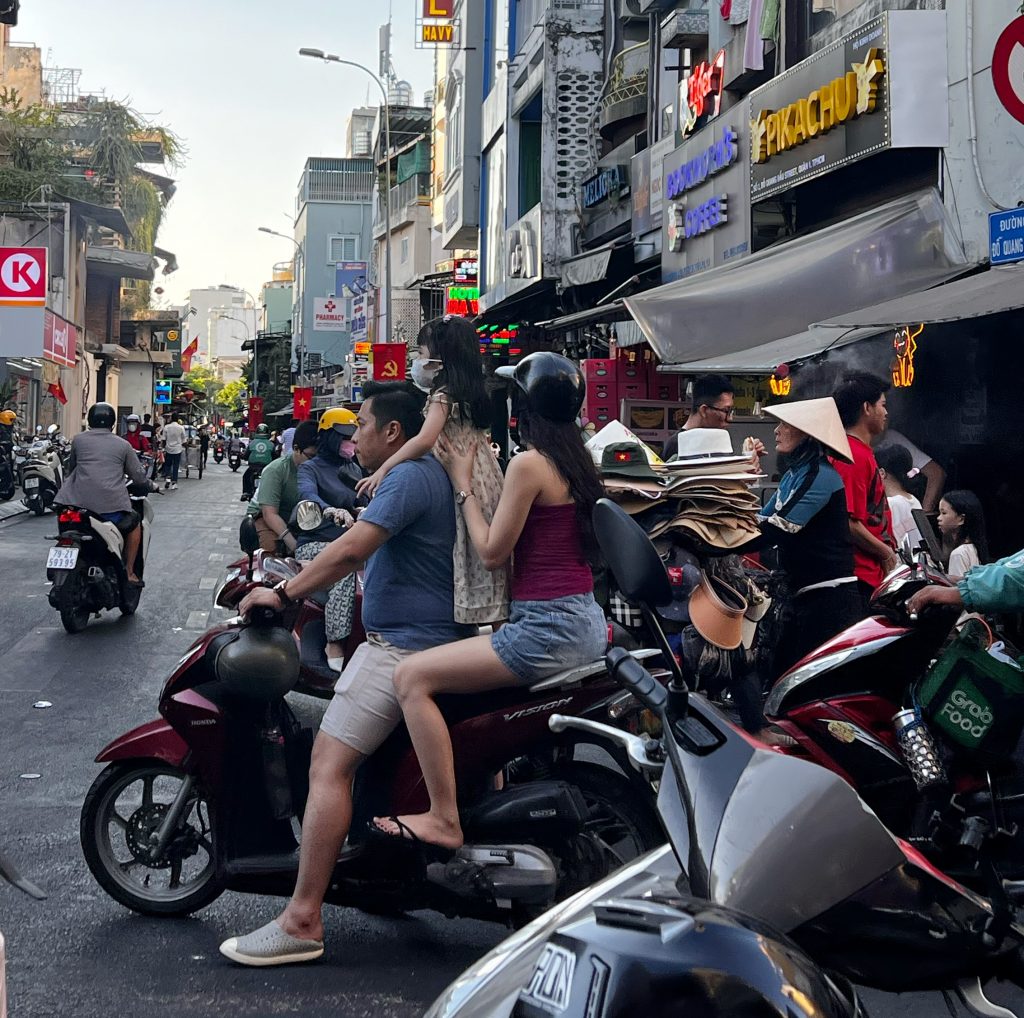
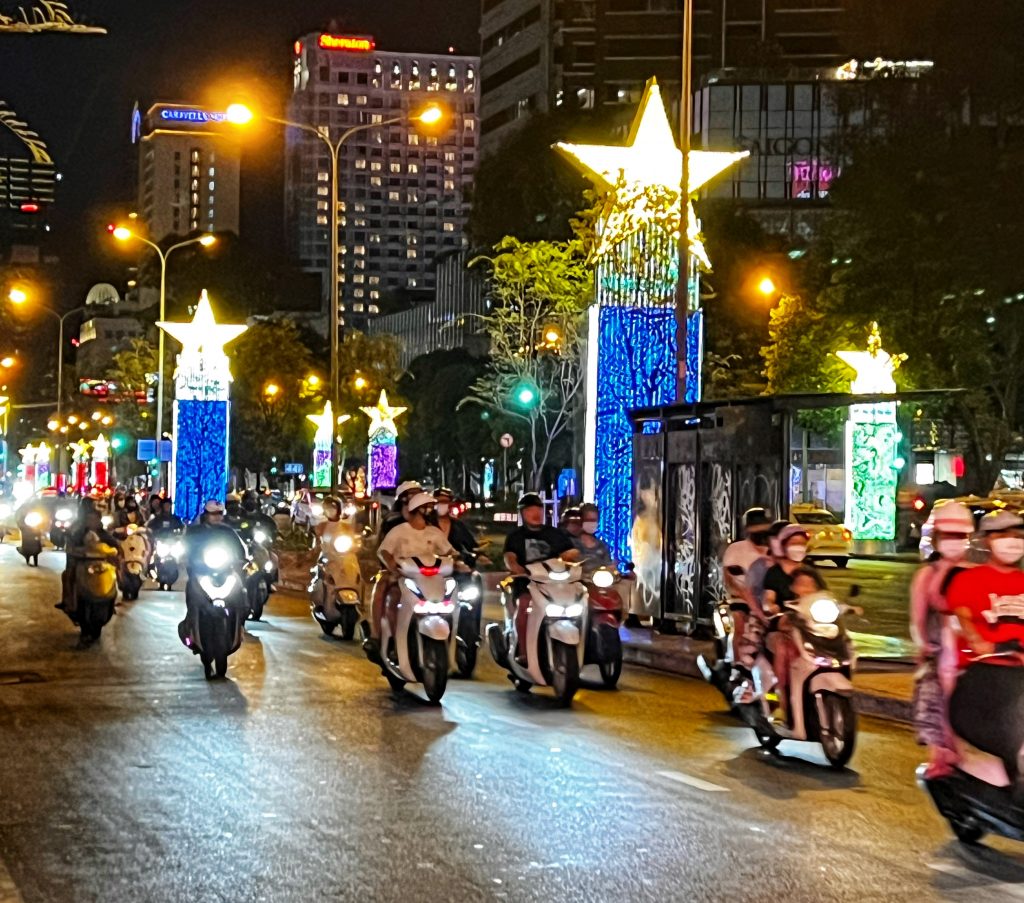
第一天入住酒店后,第一次在徒步去往碧文街步行街的路上,被车水马龙的摩托车海洋震撼到了,虽然在车流中穿梭的基因还在我的体内,每次过马路还是有些胆战心惊的。可是这种胆战心惊在第二天基本就消失了,因为这种看似混乱的车流和人流的无序交织,其实是有序的,只要不进行出人意料的动作,过马路就变成了顺手拈来之事,因为无论是摩托车,行人还是汽车,只要大家都能预测到对方的意图的行动,每个人就都能安全地行动。
After checking into the hotel on the first day, I was shocked by the sea of motorcycles as we made our way to Bui Vien Walking Street for the first time. Although the genes in me for navigating heavy traffic are still there, I was a bit nervous every time I crossed the streets. However, this nervousness basically disappeared on the second day because the seemingly chaotic interweaving of traffic and pedestrian flows is actually orderly. As long as you don’t make any unexpected moves, crossing the road becomes a breeze because as long as motorcycles, pedestrians, and cars can all predict each other’s intentions and actions, everyone can move safely – Assuming the drivers are paying attention!
对于过马路的体验,也是我对这次胡志明市之旅的体验,意外的美好和有趣。总结为以下的一些体验吧:
The experience of crossing the roads mirrors my experience of the overall trip here – unexpectedly wonderful and interesting. Let me summarize some of the experiences:
第一,越南人非常友好和有礼貌。 我俩住的酒店的工作人员,无论什么岗位,在见到客人时总是会站起来,用问候和鞠躬表示欢迎。无论是我们光顾的餐馆还是游览的景点,当地人都表现得非常礼貌。例如,在找零钱给我们时,他们总是双手递上,这一点与马来西亚的风俗相同。而且,每当我们完成消费后,他们总会真诚地表达感谢,让人真切感受到他们对客户带来生意的感激之情。
First, the Vietnamese are very friendly and polite. The staff at our hotel, regardless of their position, would always stand up and greet guests with a bow to show their welcome. Whether it was the restaurants we ate at or the attractions we visited, the locals were always very polite. For example, when giving us change, they always hand it over with both hands, which is the same practice as in Malaysia. Moreover, whenever we finished making a purchase, they would sincerely express their gratitude, making us truly feel their appreciation for the business brought by customers.
另一个更加重要的感受是,越南人对美国人表现出极大的友好,没有仇恨,这与一些中国人对日本人深刻的敌意形成了鲜明对比(这一点得再深入详写,但在此略过)。我曾在碧文街步行街的一家小店与一位服务员用谷歌翻译交流,他是一个20多岁的年轻人。当我问他越南人是否仍对美国人怀有因战争而生的仇恨时,他立刻摇头并连连挥手表示“不,不,不!”我追问原因,他打了一句越南话,但谷歌翻译未能准确翻译,所以我没能完全理解他的意思,但他对着PJG竖起了大拇指。我又问他在学校是否有被教导要仇恨美国人,他再次强调“不,不,不!”。虽然我没有继续深入对话,但可以感觉到Ta们是在向前看,不知道是否放下了过去,但是这种态度展示了越南人对历史的一种成熟和前瞻性处理方式。
Another more important feeling is that the Vietnamese show great friendliness towards Americans, without hatred, which forms a sharp contrast to the deep animosity some Chinese people have towards the Japanese (this point needs to be elaborated on in depth, but I will skip over it here). I once communicated with a waiter in a small bar on Bui Vien Walking Street using Google Translate. He was a young man in his 20s. When I asked him if the Vietnamese still harbored any hatred towards Americans due to the war, he immediately shook his head and waved his hands, indicating “No, no, no!” I asked for the reason, and he typed a sentence in Vietnamese, but unfortunately Google Translate failed to accurately translate it, so I didn’t fully understand his meaning. But, he gave PJG a thumbs up. I asked him again if he was taught to hate Americans in school, and he emphasized “No, no, no!” again. Although I didn’t continue the conversation in depth, I felt that they are forward looking people and not dwelling on the past.
第二,越南没有防火墙。虽然越南的政府也对媒体和互联网有一定的控制,限制公民表达的自由,但是,这里没有防火墙啊,同志们,没有防火墙,这是多么大的区别啊。这意味着,越南人能够接触到国际的信息,听到世界各地的声音。这种开放的信息通道在很大程度上影响了人们的视野和思维方式,让Ta们有机会更全面地了解世界。
Second, Vietnam does not have an extensive internet firewall. Although the Vietnamese government does have some control over the media and the Internet and restricts citizens’ freedom of expression, there is no strict firewall here. This is actually a very big difference. This means that the Vietnamese can mostly access international information and hear voices from all over the world. This open information channel greatly influences people’s horizons and ways of thinking, giving them the opportunity to understand the world more comprehensively. This is in stark contrast to the information access allowed in China.
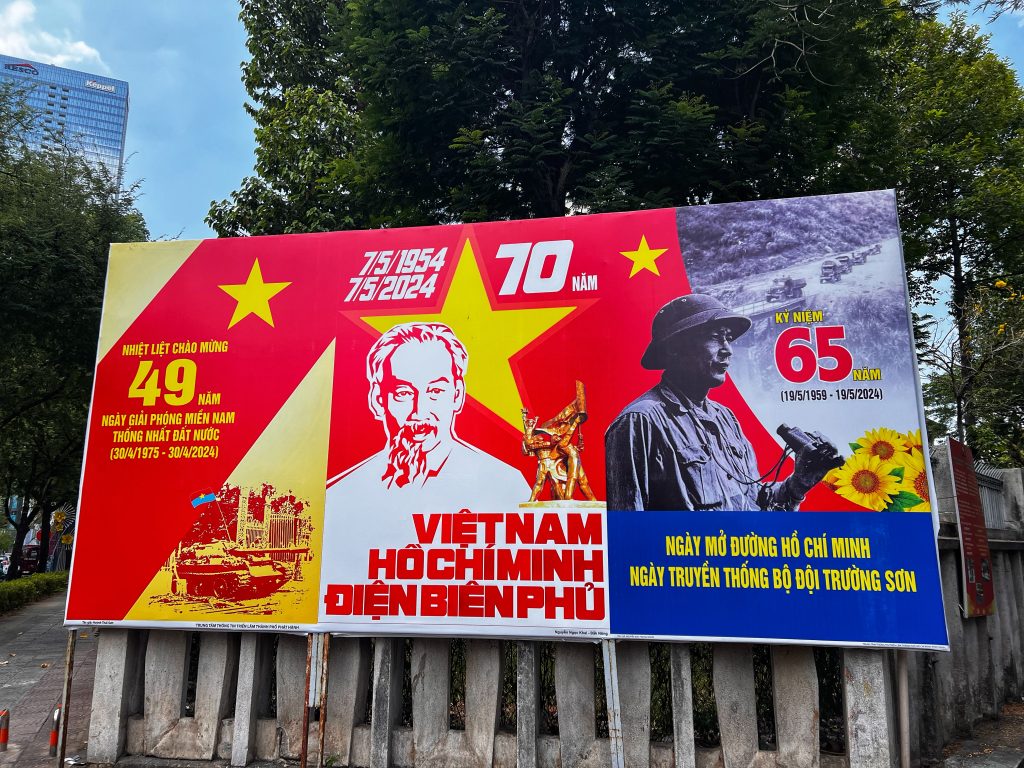
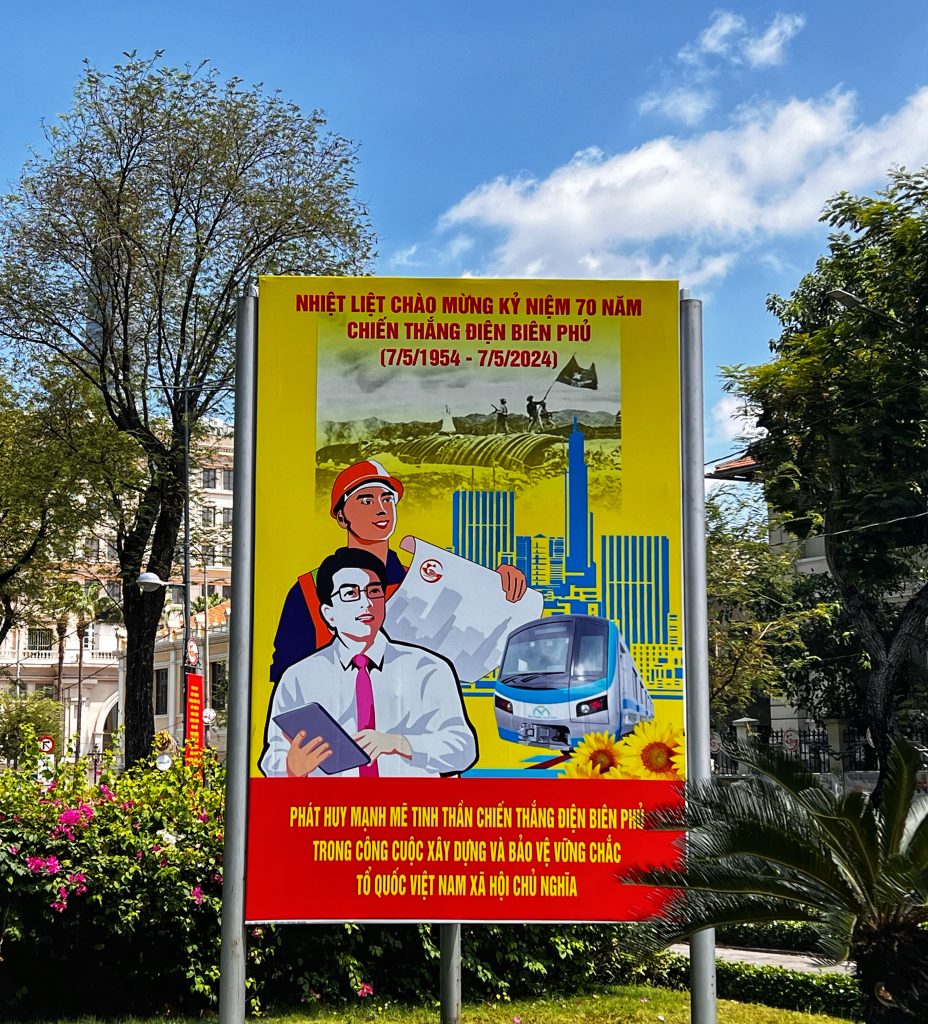
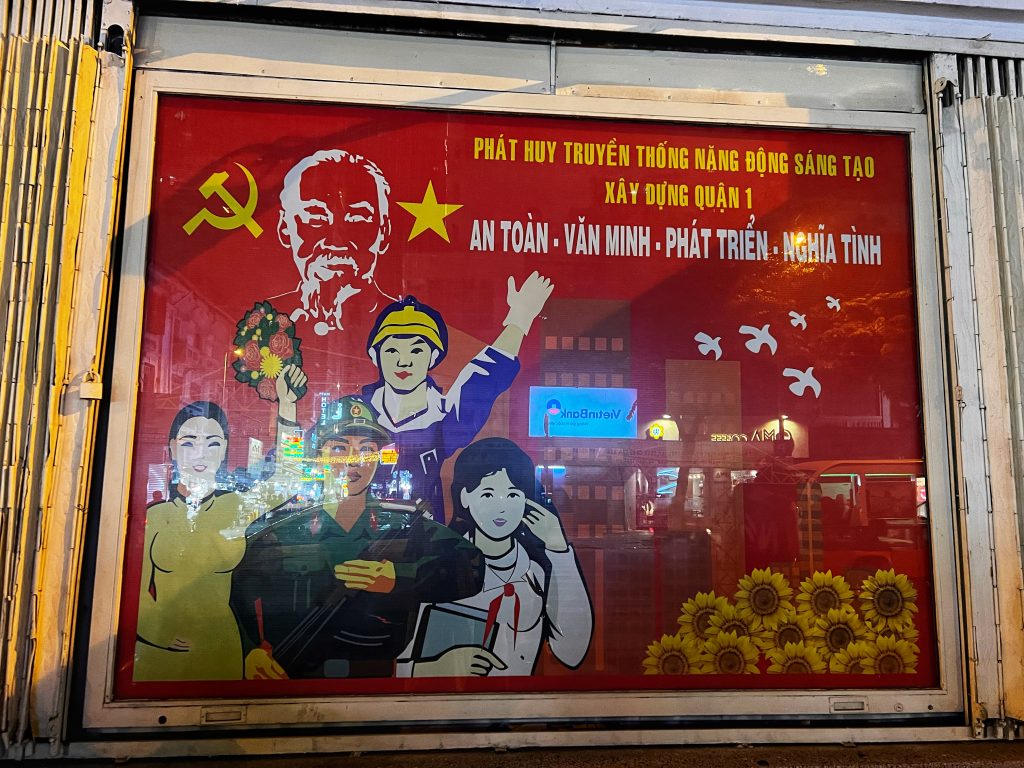
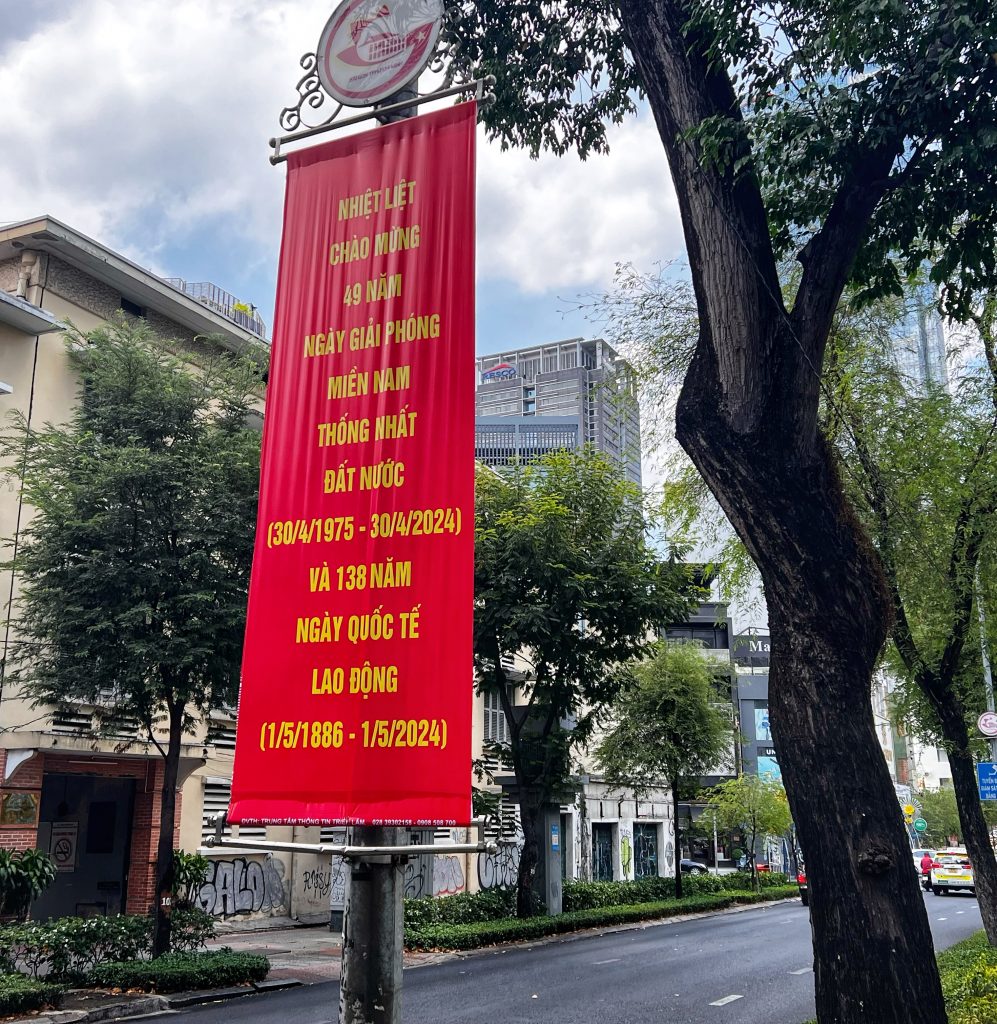
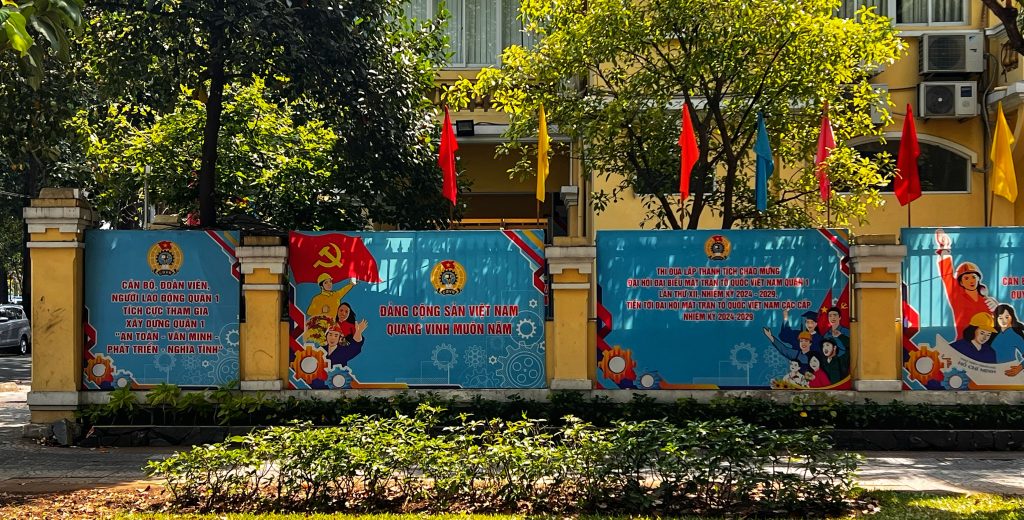
第三,我在胡志明市的大街小巷中并未看到像“跟党走,听党话”这样的政治宣传标语。这或许是因为我不懂越南语,但我所能看到的,主要是庆祝越南战争胜利49周年的宣传标识,以及一些展示工人阶级力量、团结协作、日益繁荣的宣传画。这种展现是共产党国家的一个共性,因为在欧洲和美洲,这样的宣传几乎是看不到的。
Third, I did not see political propaganda slogans like “Follow the Party, listen to the Party” on the streets of Ho Chi Minh. This is not because I don’t understand Vietnamese, but what I saw was mainly propaganda signs celebrating the 49th anniversary of the victory of the Vietnam War, as well as some propaganda paintings showcasing the strength of the working class, unity and cooperation, and growing prosperity. This kind of display is a common among communist countries, and in Europe and the Americas, such propaganda is rarely seen.
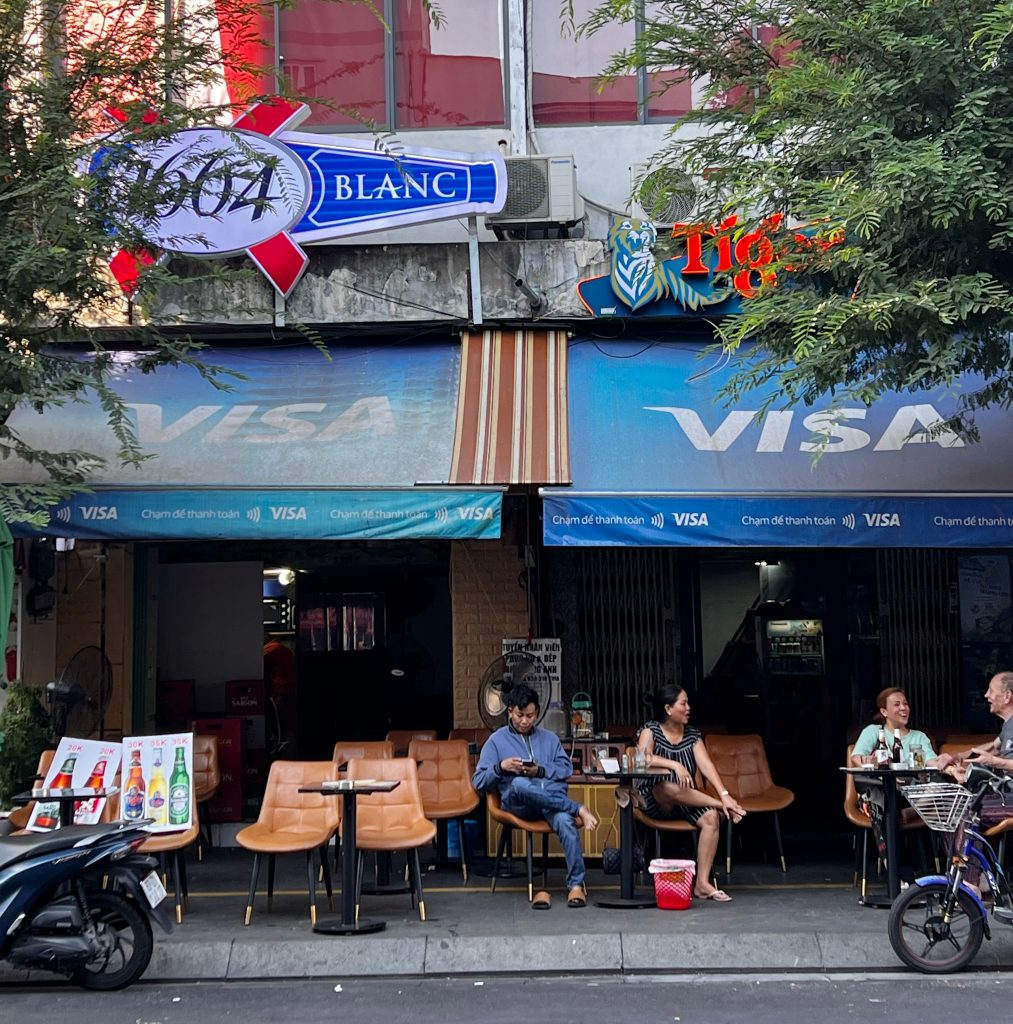
第四,人生百相。在胡志明市,生活的万花筒似乎转动得尤为迅速而纷繁。尽管每个国家都是百态人生,但这里的日常带给我更为深刻的感受,时时地让我想起那些被标记为“低端人口”的人们相同的挣扎与希望。在碧文街步行街的一角,PJG和我会在一家小店前的凳子上坐下,手里握着不到80美分的西贡啤酒,眼前是一幕幕人生百态的活剧。
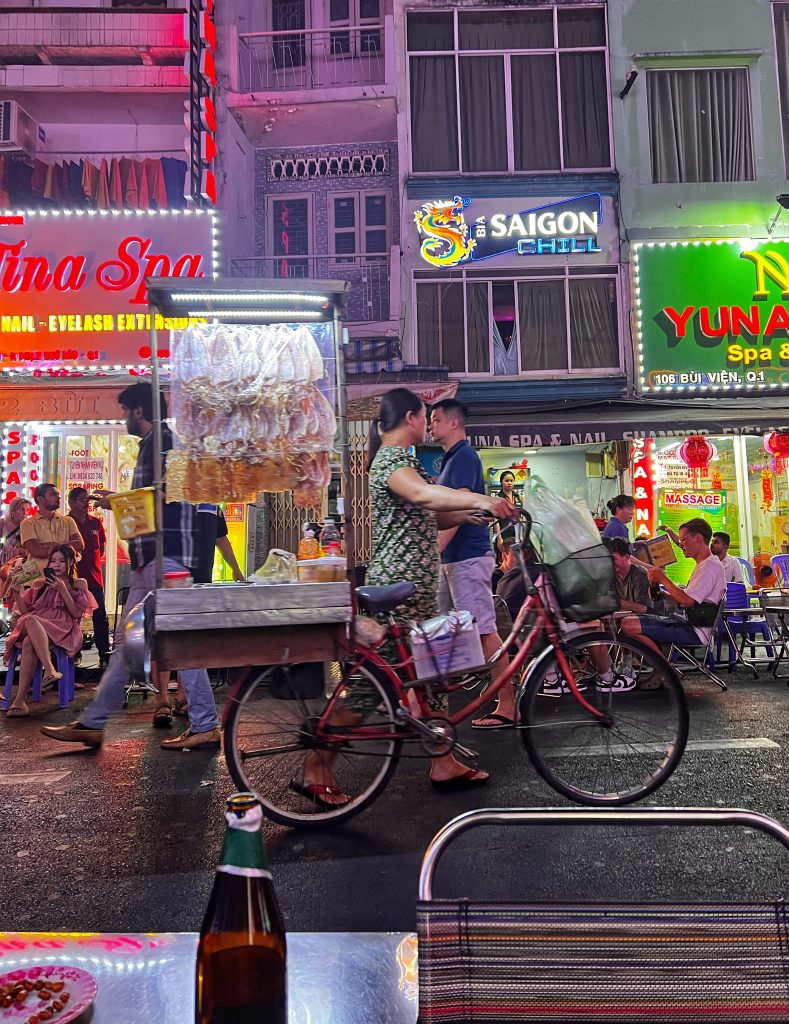
Fourth, the kaleidoscope of life. In Ho Chi Minh, the kaleidoscope of life seems to rotate particularly rapidly and diversely. Although every country has a myriad of lives, the everyday life here gives me a deeper feeling, constantly reminding me of the same struggles and hopes of those labeled “low-end population” in China. In a corner of Bui Vien Walking Street, PJG and I would sit on a bench in front of a small store, holding a Saigon beer that cost less than 80 cents, watching scenes of life unfold before our eyes.
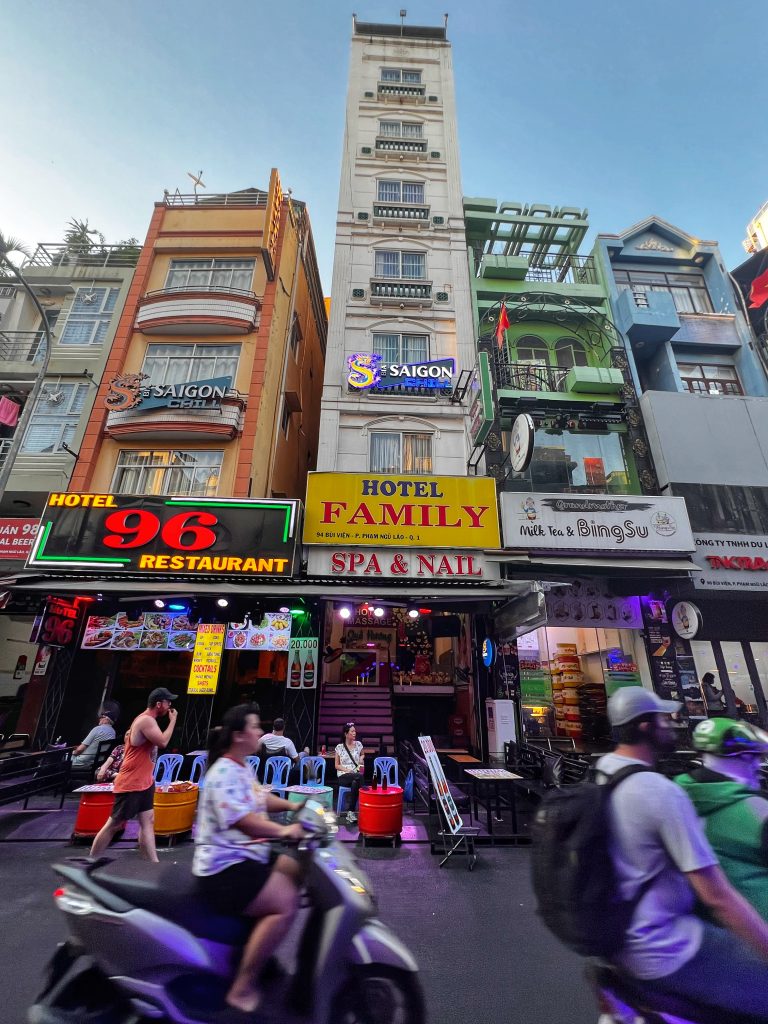
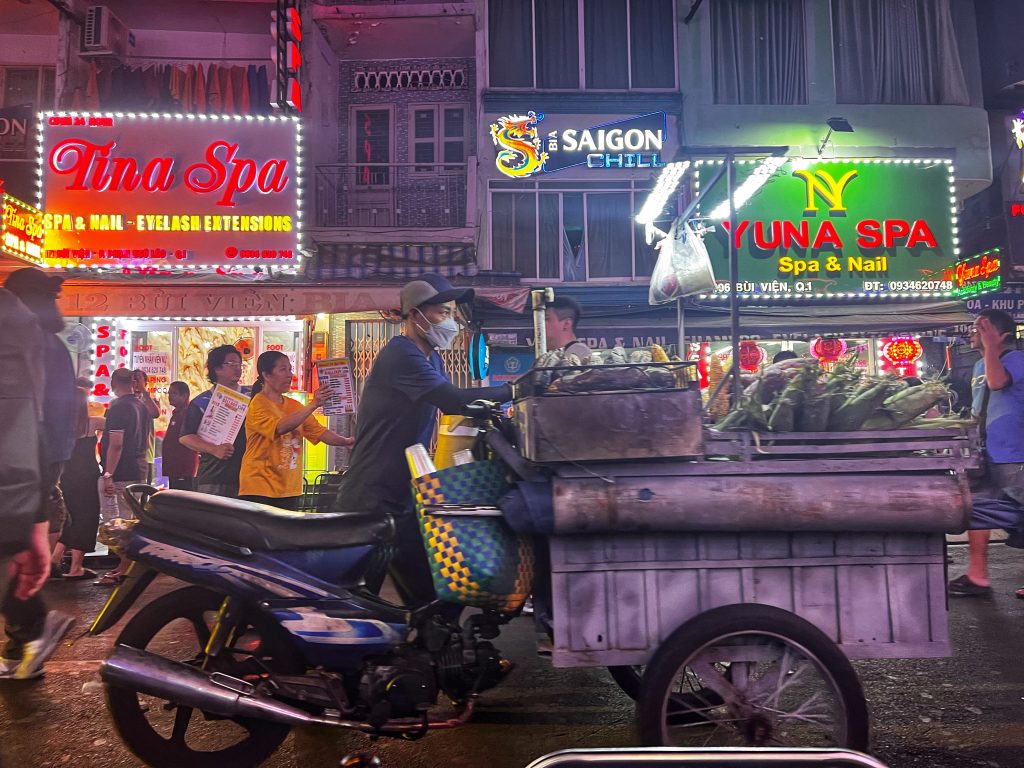
我俩每次光顾的小店要特别说一下,经常光顾的三家店各有其白天的身份:一家洗衣,一家按摩,还有一家不知道,到了傍晚它们就神秘转身,变成街头啤酒坊。他们会在忙碌的路边摆出小桌小椅,店员在车流和人潮中游走,招揽顾客。那个曾与我用谷歌翻译聊天的年轻店员,第二次见到我们时,高兴地从座位上跳起来迎接我们。洗衣店的女主人长得有点像美国的红人演员和脱口秀主持人Ali Wong,我俩告诉她,并给她看了照片,她却并没有什么反应,她应该不认识Ali Wong。
I have to mention about the small little bars we frequented each time. The three little bars we often visited had their daytime identities: one was a laundry, one was a massage parlor, and the other one was something else. In the evening, they mysteriously transformed into little street beer bars selling the cheapest beer on the street. They would set up small tables and chairs on the busy roadside, and the waiters would weave through the traffic and crowds soliciting customers. The young waiter who had chatted with the previous night happily jumped up from his seat to greet us. The female owner of the laundry store looked a bit like the American celebrity actress and comedian Ali Wong. We told her that and showed her a photo, but she didn’t have much reaction. She probably doesn’t know Ali Wong.
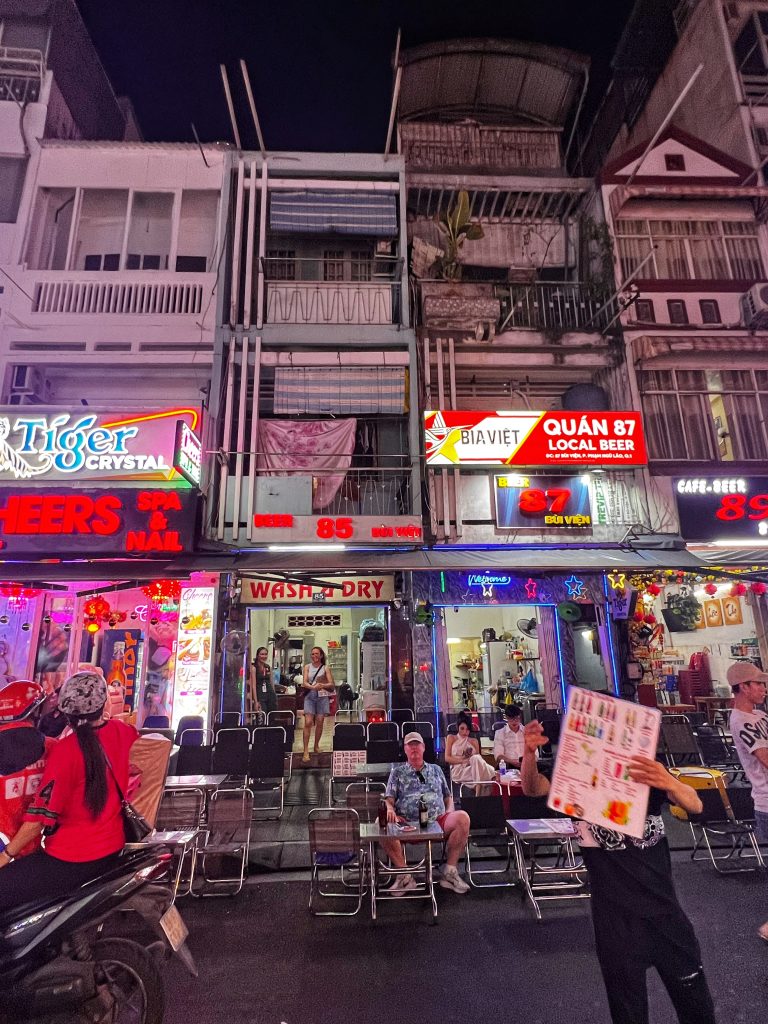
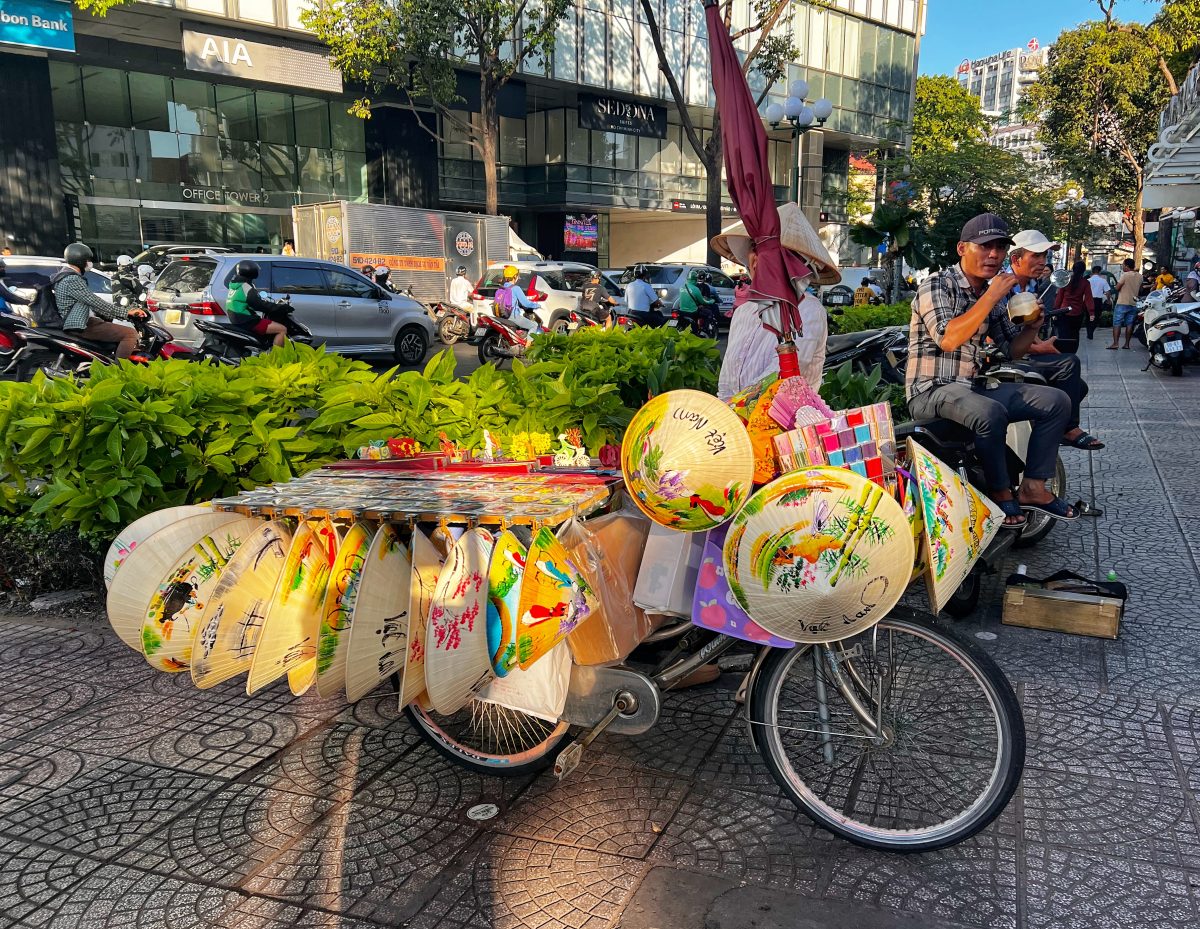
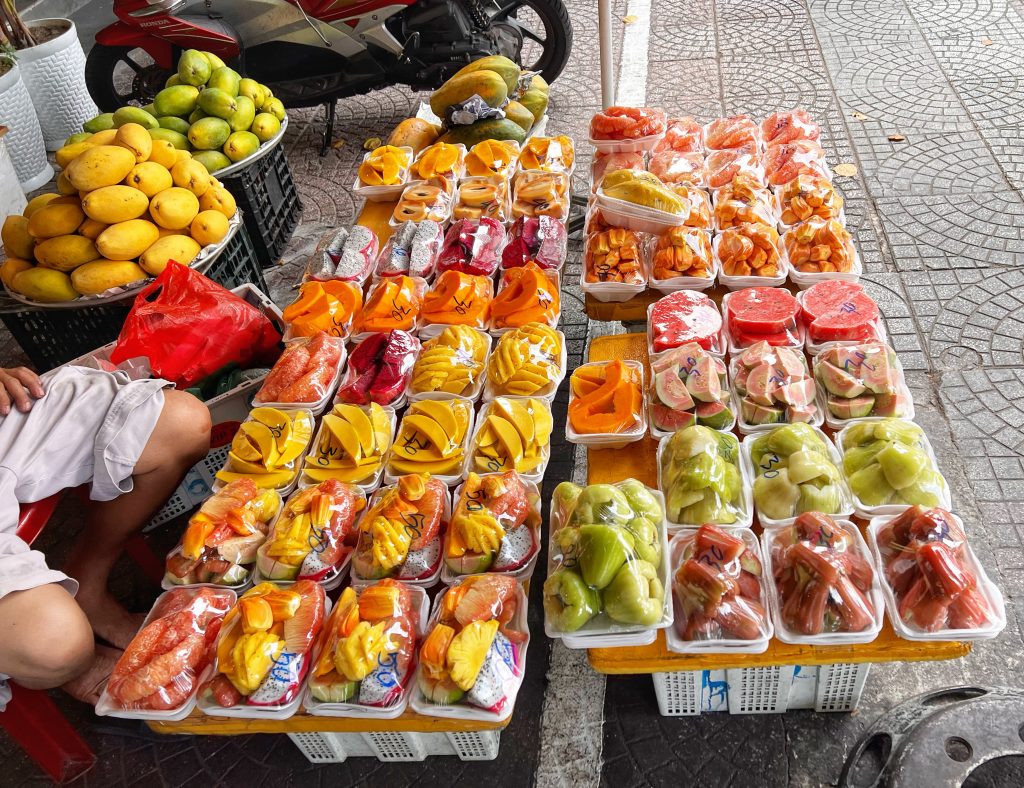
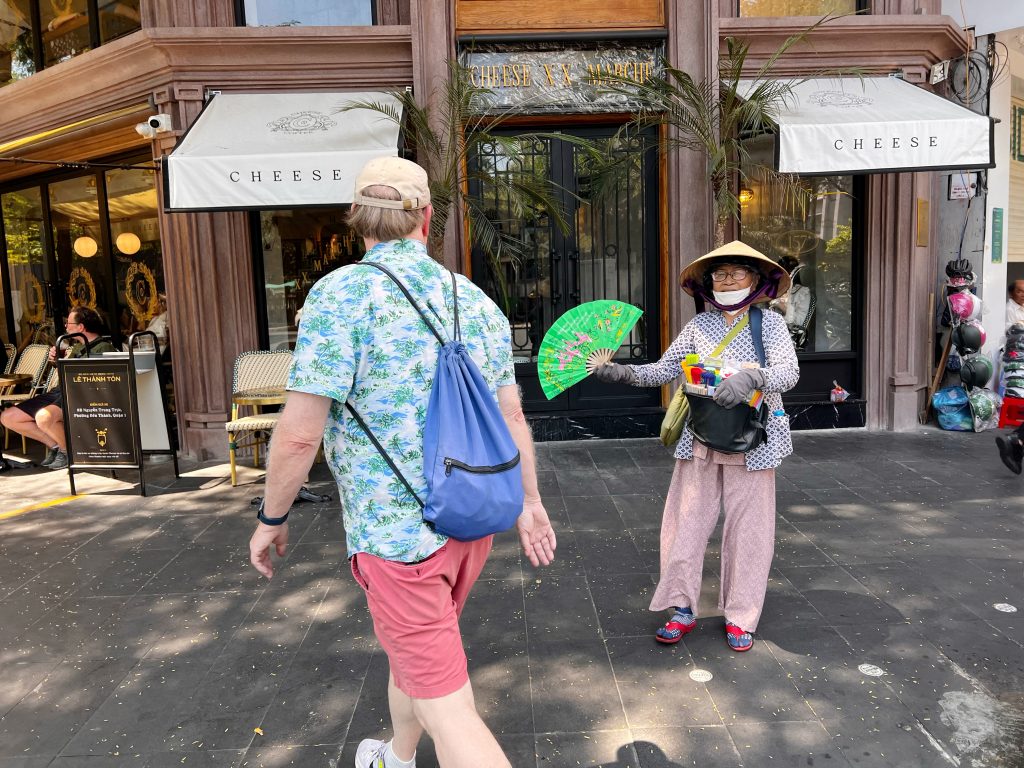
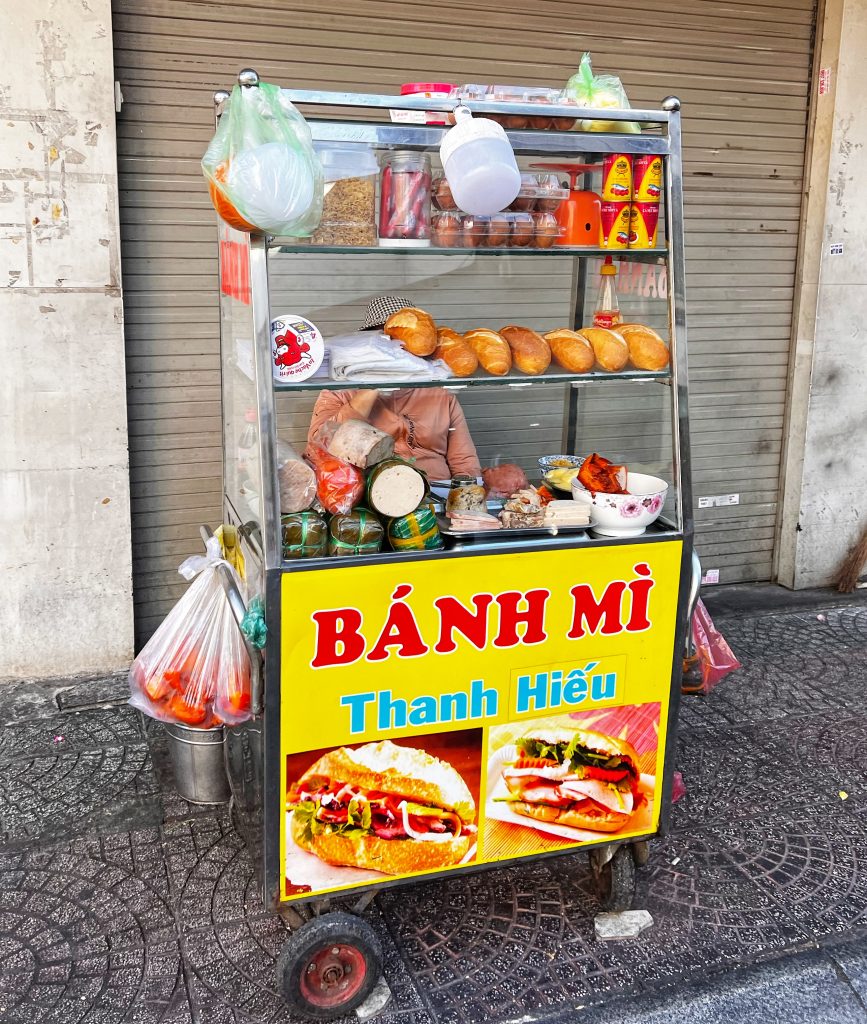
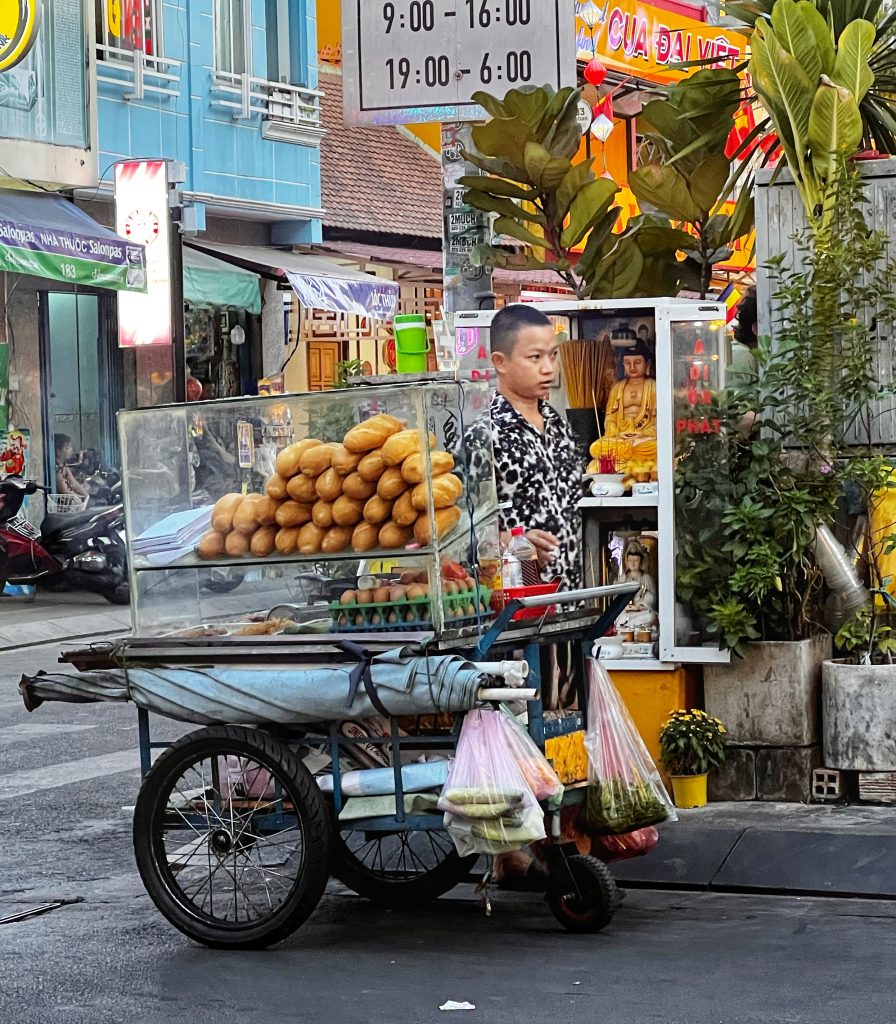
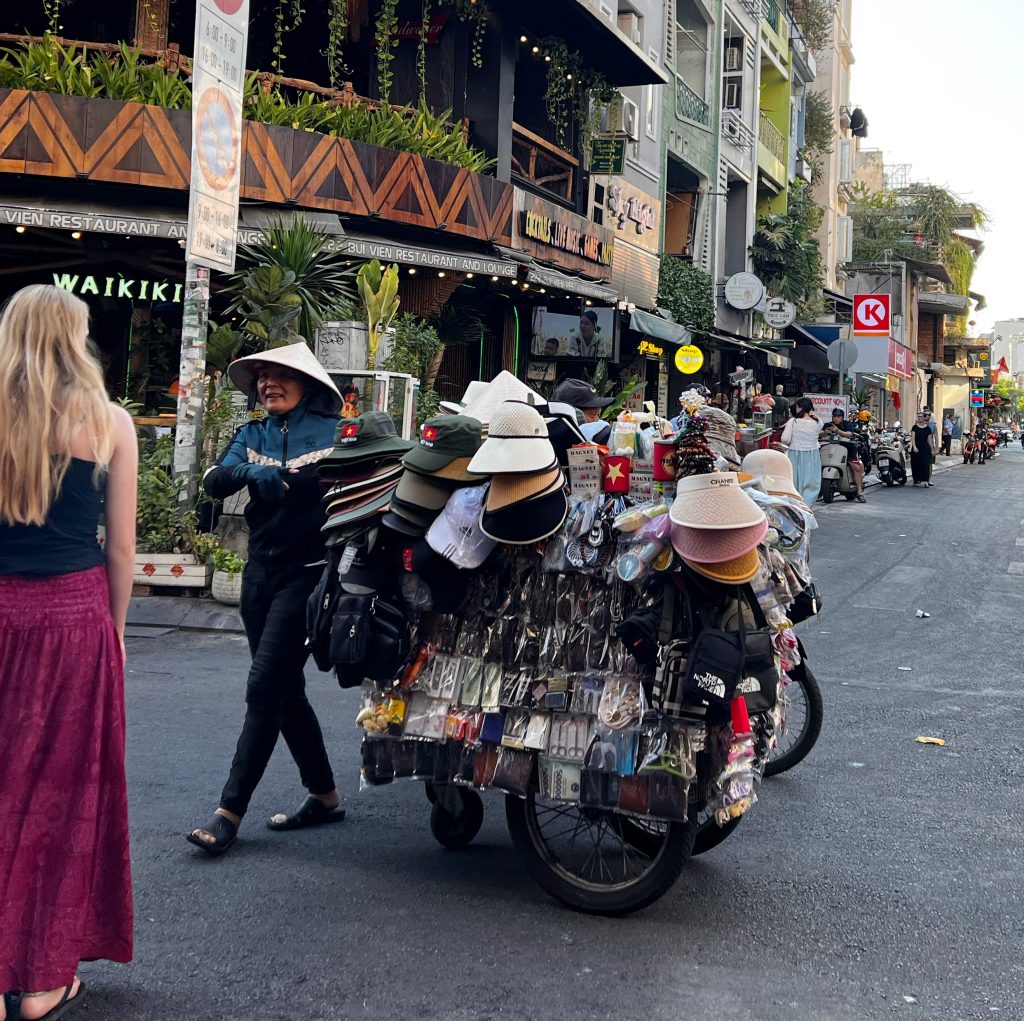
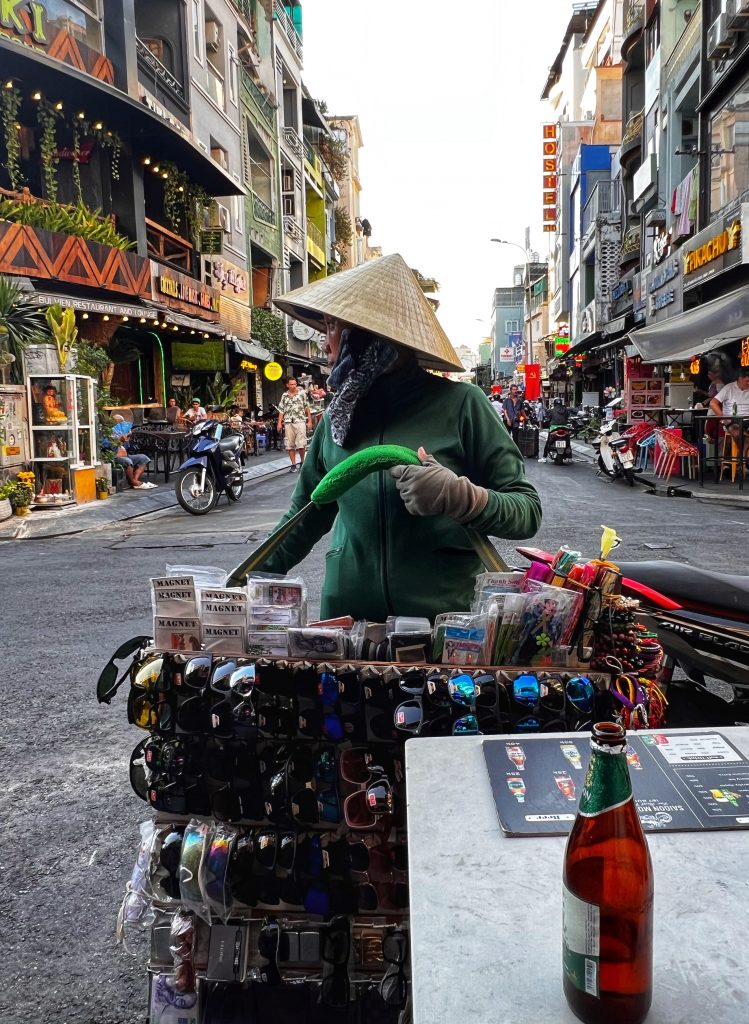
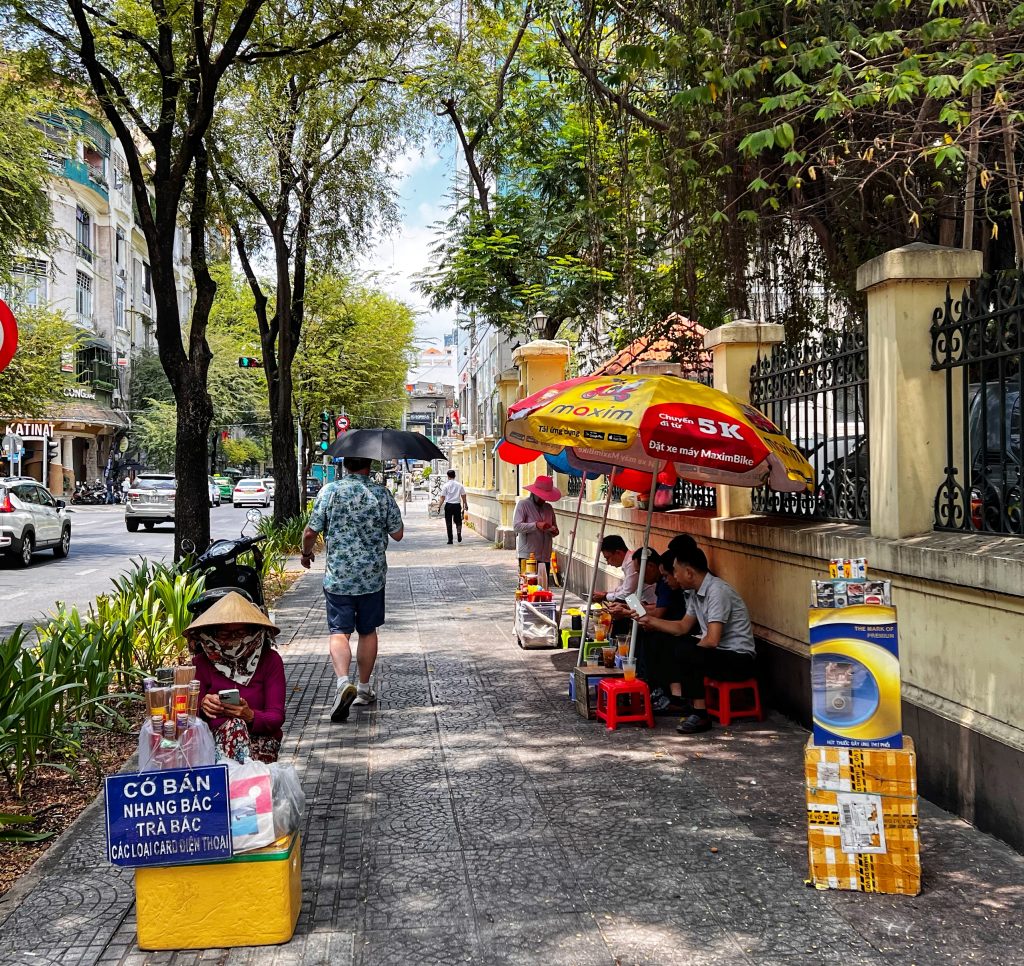
坐在街边的小椅子上看着过往的人流和车流,观察者街道的脉动。有摩托车上载着不戴头盔的小朋友的,有摩托车上载着货物的,有扛着扁担,扁担上挂着卖旅游纪念品,帽子,眼镜等等,有卖花生和水果的,有带着几岁的小孩沿街卖扇子的,有卖打火机的,有和尚卖好运的,有过来擦鞋的,有口含汽油喷火表演的,有推着小车卖越南面包,越南三明治的,有卖烤鱿鱼的,有扛着凳子和厨具,餐具的游动路边摊的,有按摩店招揽顾客拽着行人胳膊的,有在大的酒吧门口的舞台上表演跳舞的男孩和女孩们,我可能已经忘记了很多。坐在街边可以这么毫无保留地看到人生百相,可以真切地感受到生活的原汁原味,体验到人们为了生计所做出的无畏和无尽的努力。
Sitting on the small chairs on the street and watching the passing crowds and traffic, weaved us into the pulse of the street. There were motorcycles carrying children without helmets, motorcycles carrying goods, people carrying shoulder poles with tourist souvenirs, hats, glasses, etc., people selling peanuts and fruits, people with a toddlers selling fans along the street, people selling lighters, monks selling good luck, people coming to shine shoes, people spitting fire with gasoline in their mouths, people pushing carts selling Vietnamese Banh Mi, people selling grilled squid, people carrying stools, cookware, and tableware for mobile street stalls, massage parlors soliciting customers by pulling the arms of passersby, boys and girls performing dances on stages at the entrance of the larger bars … I may have already forgotten many other examples. Sitting on the street, you can see the myriad lives in such an unrestrained way, truly feel the original taste of life, and experience people’s fearless and endless efforts for their livelihoods.
第五,越南的物价之亲民令人赞叹。我们在这里享用的一顿最昂贵的大餐,包括四道菜、两瓶啤酒以及两杯鸡尾酒,总计也只花费了一百多万越南盾,不到50美元。这样的价格在许多其他国家几乎难以想象,使得我们在越南的每一顿饭都变得格外惬意和满足。使用Grab出行,即使是10到20分钟的车程,费用通常也只在1到2美元之间。观看一场交响乐演出,第二等座位的票价仅需30美元。除了炎热的气候和有时挑战性的交通状况外,这里的生活性价比极高,让人在享受当地生活的同时,也能感受到物超所值的满足感。
Fifth, the affordability of prices in Vietnam is amazing. The most expensive meal we enjoyed here, included four large dishes, two bottles of beer, and two cocktails, and cost just over one million Vietnamese dong, less than $50. Such prices are almost unimaginable in many other countries, making every meal we had in Vietnam particularly comfortable and satisfying. Using Grab for transportation, even for a 10 to 20-minute ride, the cost was usually only between $1 and $2. Watching a symphony orchestra performance, the ticket price for amazing seats was only $30. Apart from the hot climate and sometimes challenging traffic conditions, the cost-effectiveness of life here is extremely high, allowing people to enjoy local life while also feeling a sense of value for money.
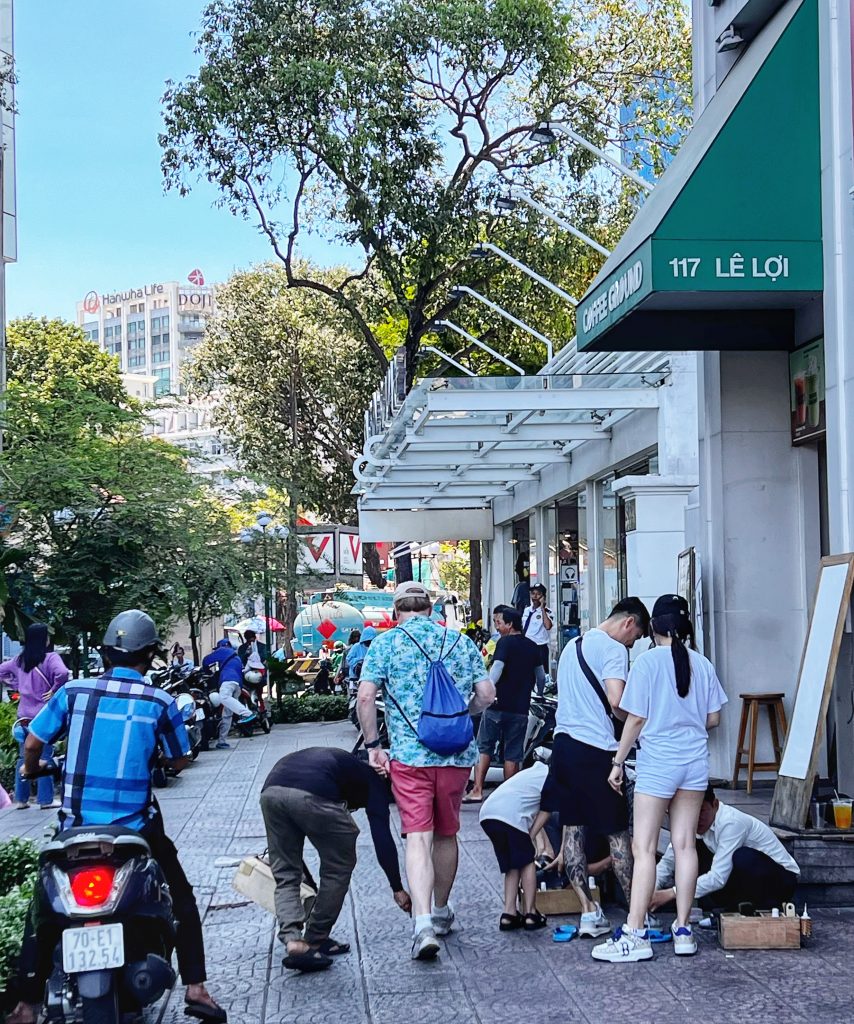
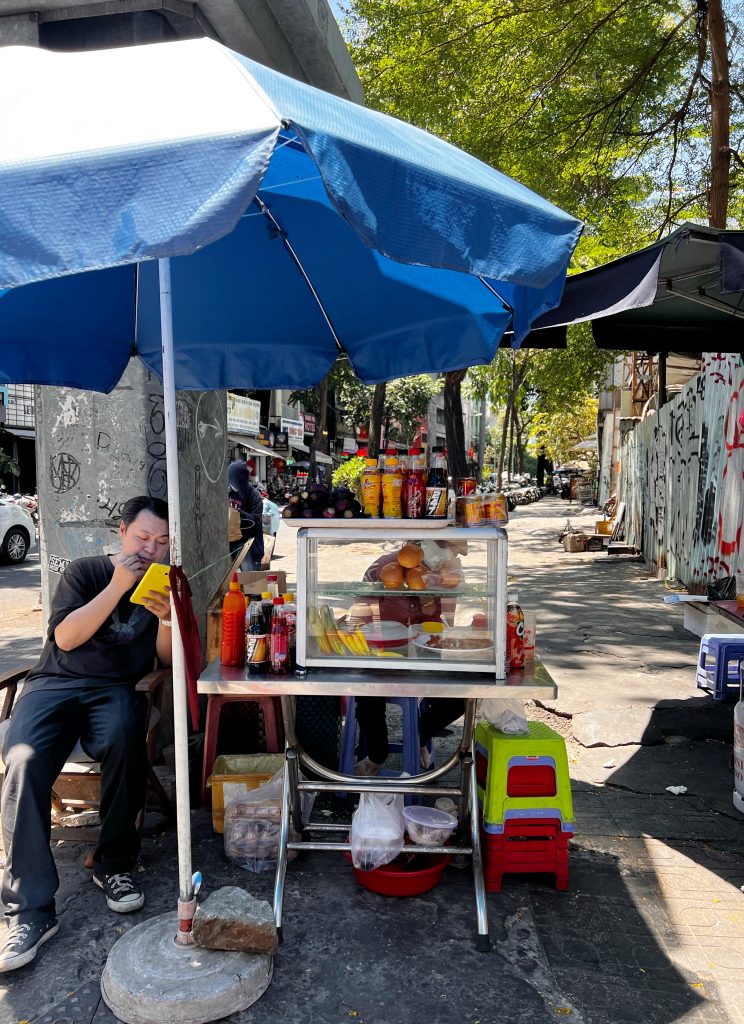
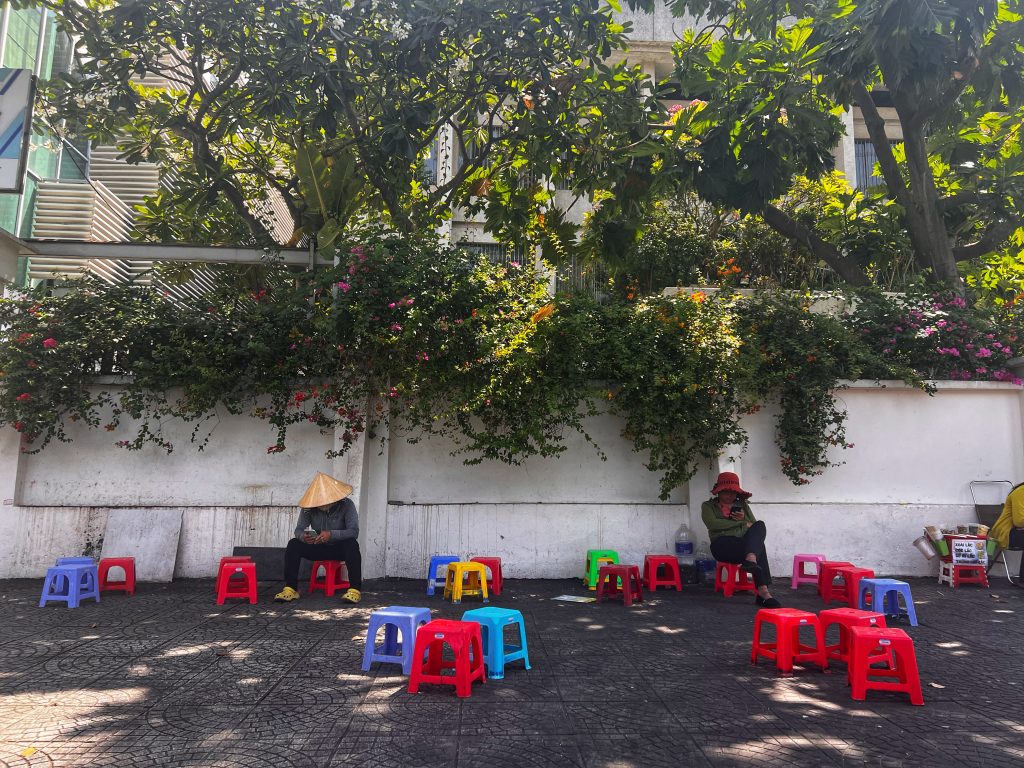
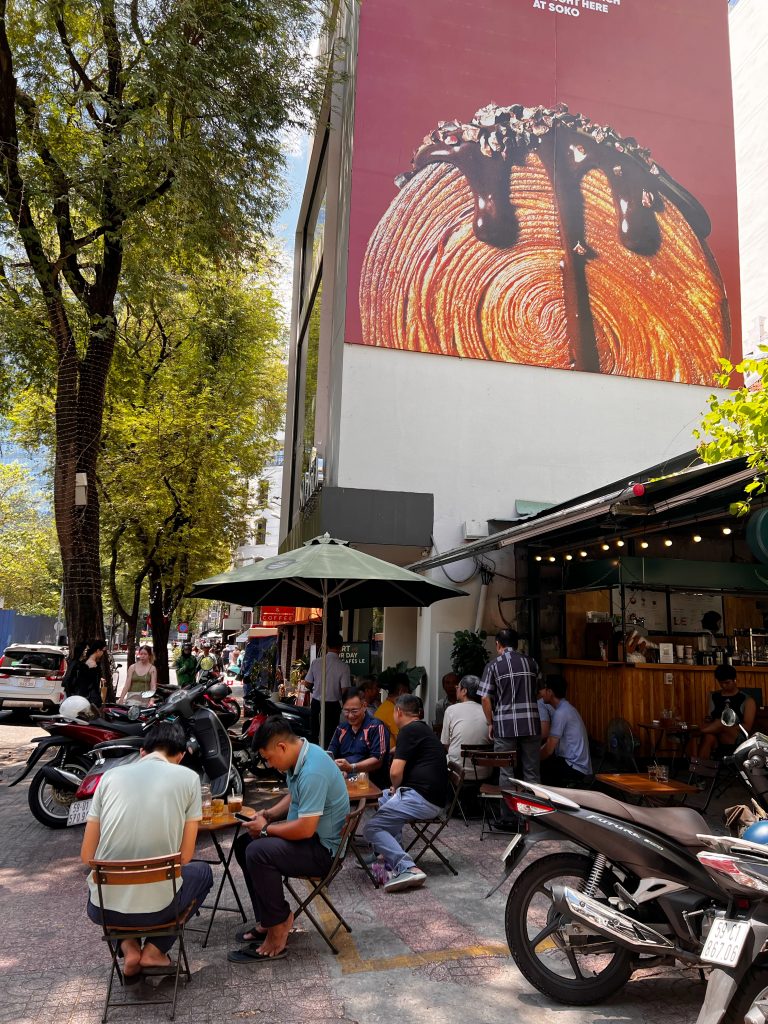
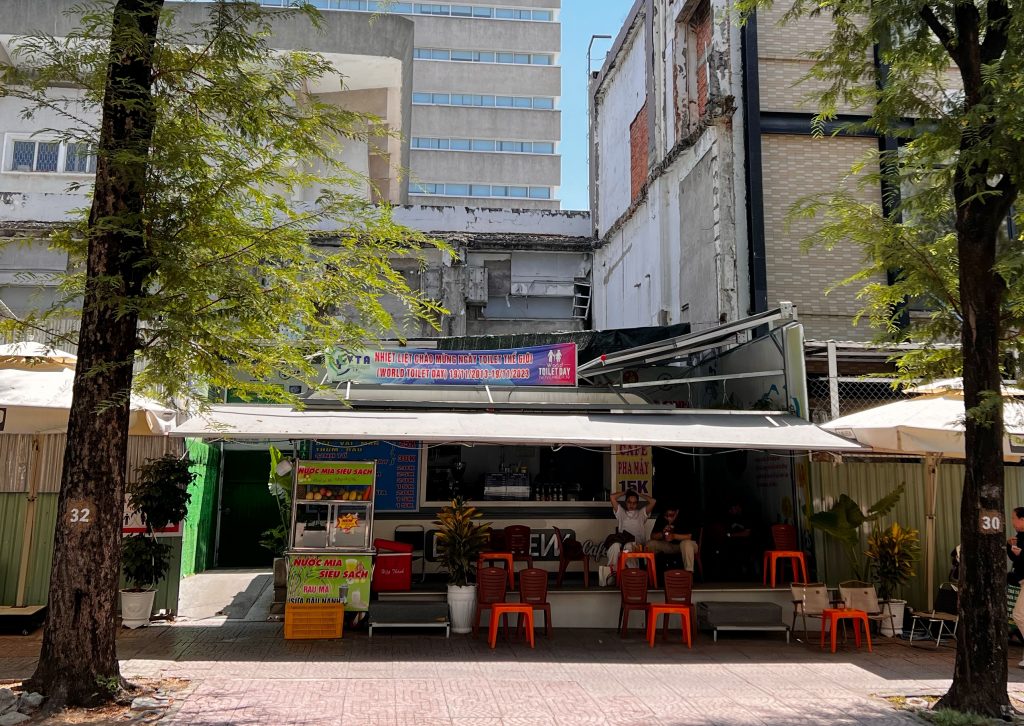
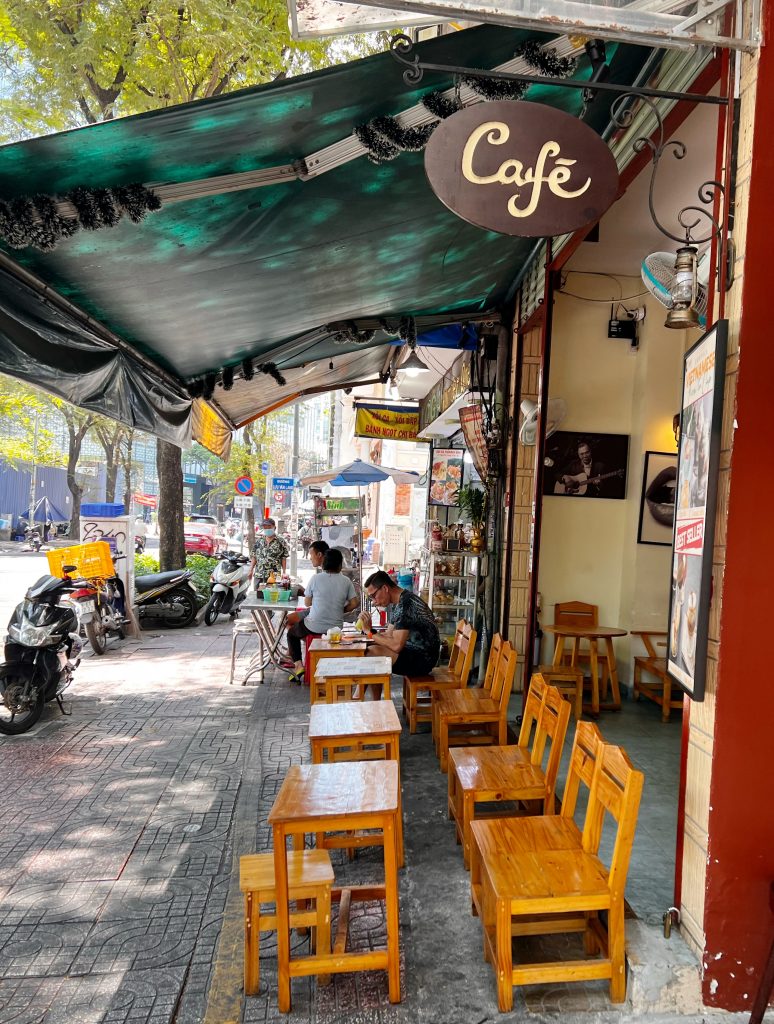
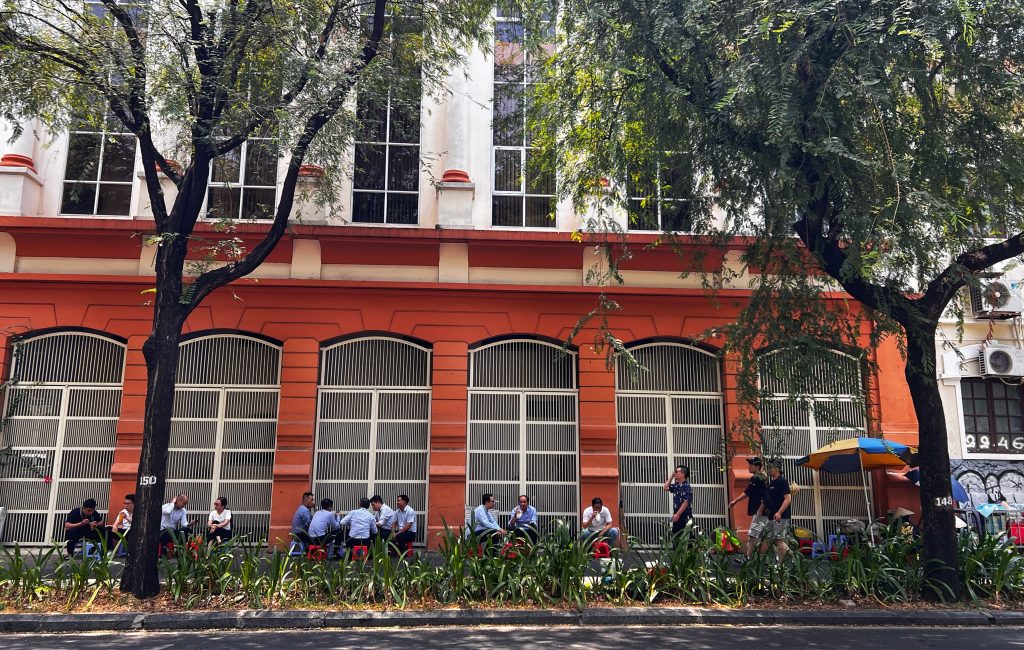
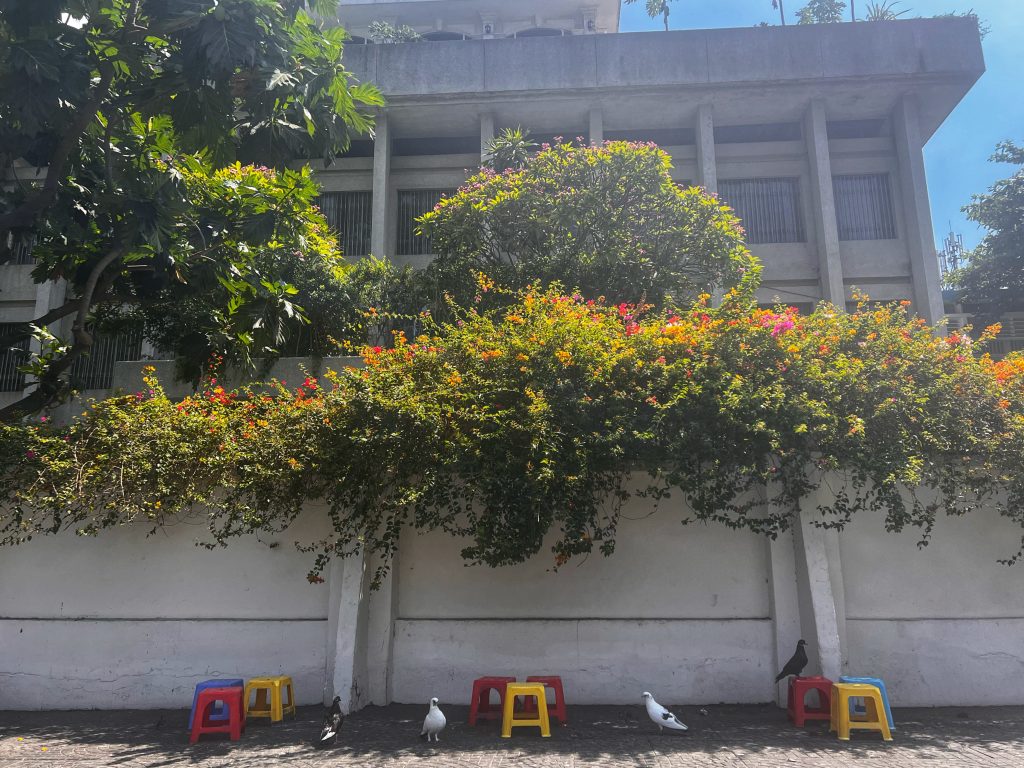
第六,越南人的放松。在街头,常常可以看到售卖饮品和冷饮的街边小摊或小店。这些地方通常会在路边摆放几张小桌子和几把小椅子,人们坐在阴凉处,一边喝着饮料或咖啡,一边浏览手机或与朋友闲聊。这种场景让人联想到巴黎街边的咖啡店,椅子沿着墙边或店边排列,法国人在舒适的环境中,说着高贵的法语,享受悠闲的下午茶时光。虽然胡志明市或许是一个缩小版的巴黎,但那种放松和享受生活的精神却是一脉相承的。
Sixth, the relaxation of the Vietnamese people. On the streets, you can often see street vendors or small stores selling drinks and cold beverages. These places usually set up a few small impromptu tables and chairs on the roadside, and people sit in the shade, sipping drinks or coffee while browsing their phones or chatting with friends. This scene is reminiscent of the cafes on the streets of Paris, with chairs arranged along the wall or the sides stores, and the French people enjoying a leisurely afternoon tea time in a comfortable environment, speaking noble French. Although Ho Chi Minh may only be a miniature version of Paris, the spirit of relaxation and enjoyment of life is the same.
第七,文化的融合性,我们在胡志明市意外地看到了天主教和基督教的教堂、穆斯林的清真寺,以及来自不同亚洲国家的佛教寺庙。这是非常让我出乎意料的画面,这里的党国竟然允许不同的信仰的出现?
Seventh, the co-existence of different religions. In Ho Chi Minh, we surprisingly saw Catholic and Christian churches, Muslim mosques, and Buddhist temples from different Asian countries. To me, this was a very surprising sight. The Party here actually allows the existence of different faiths?
在写这篇总结时,我意识到有许多内容想要分享,但为避免篇幅过长,我决定仅简要点述。在越南胡志明市的旅行体验非常美好,甚至可以说是意外的惊喜,它在一定程度上解开了我对这个国家的好奇。当然,六天的旅程很短暂,对一个地方,当地人和其文化的了解难免肤浅。尽管如此,这段简短的体验让我感激地看到不同,也让我我期待有下一次更久的越南之旅。
While writing this summary, I realized that there is a lot of content I want to share, but to avoid making it too long, I decided to only briefly mention them. The travel experience in Ho Chi Minh was very beautiful, and even unexpectedly surprising. To some extent, it unraveled my curiosity about this country. Of course, a six-day trip is very short, and it is inevitably superficial to understand a place, its people, and its culture. Nevertheless, this brief experience made me gratefully see the differences and also made me look forward to a longer trip to Vietnam at another time.
A very interesting blog post about your impressions of Vietnam and Ho Chi Minh City. I can feel your love for the country and your wish to return for a more in depth visit of the city and surrounding areas.
原来越南是这个样子的,看来不体验是不知道的。